Shows and Exhibits

Langston Hughes: Pioneer Poet moves onto another venue

Wow I’ve gotten a lot of mileage out of this one piece. My quilt Langston Hughes: Pioneer Poet moves onto it’s 5th venue in October 2024.
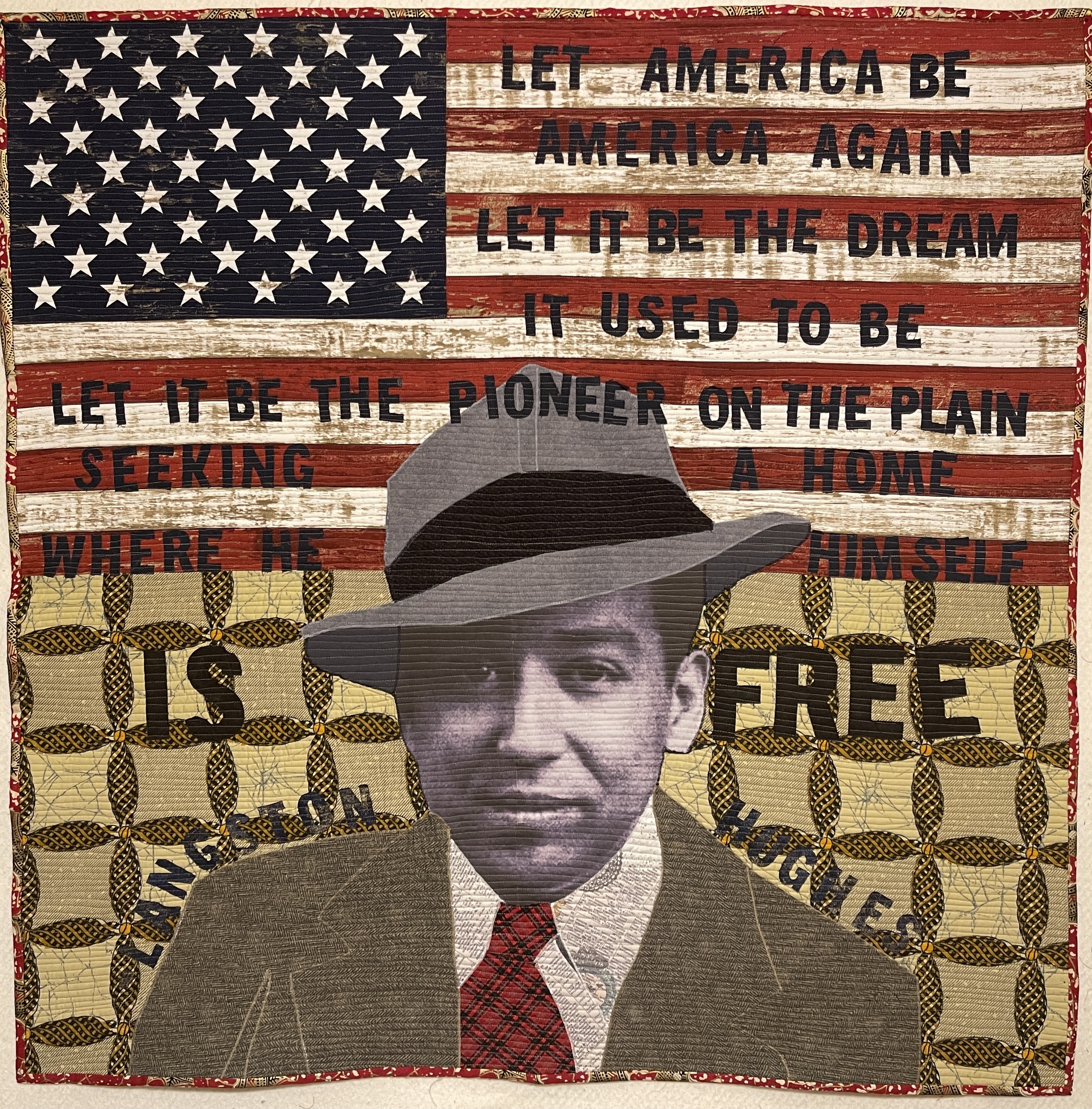
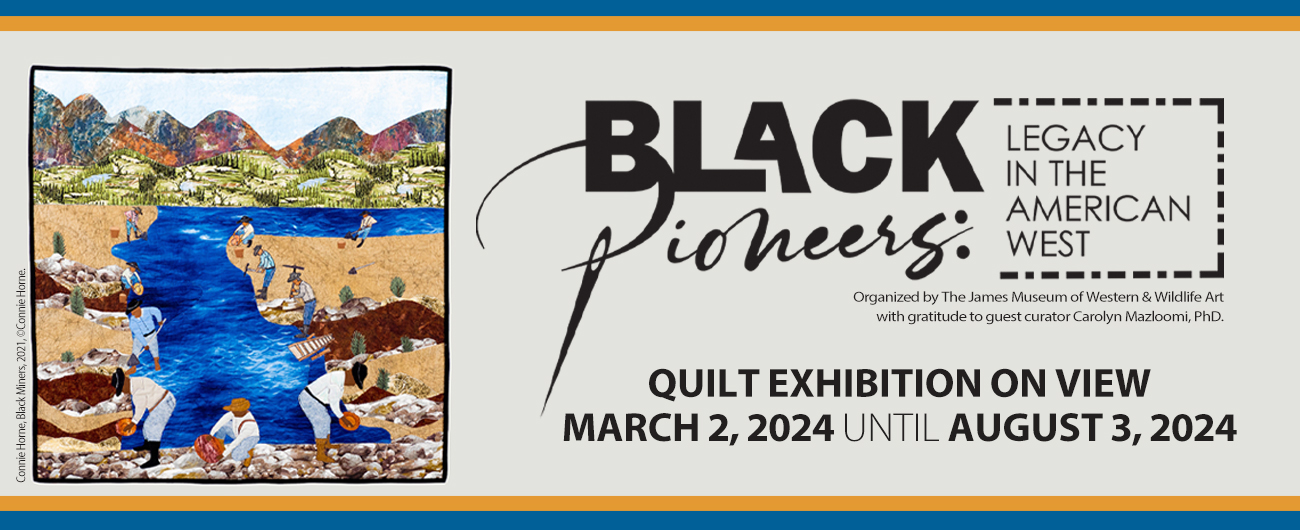
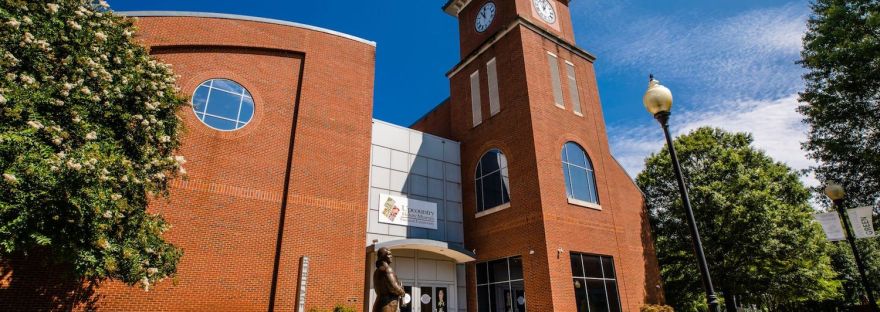
It will be shown as part of the show Black Pioneers: Legacy in the American West at the Upcountry History Museum in Greenville, South Carolina October 26, 2024 – March 2, 2025.
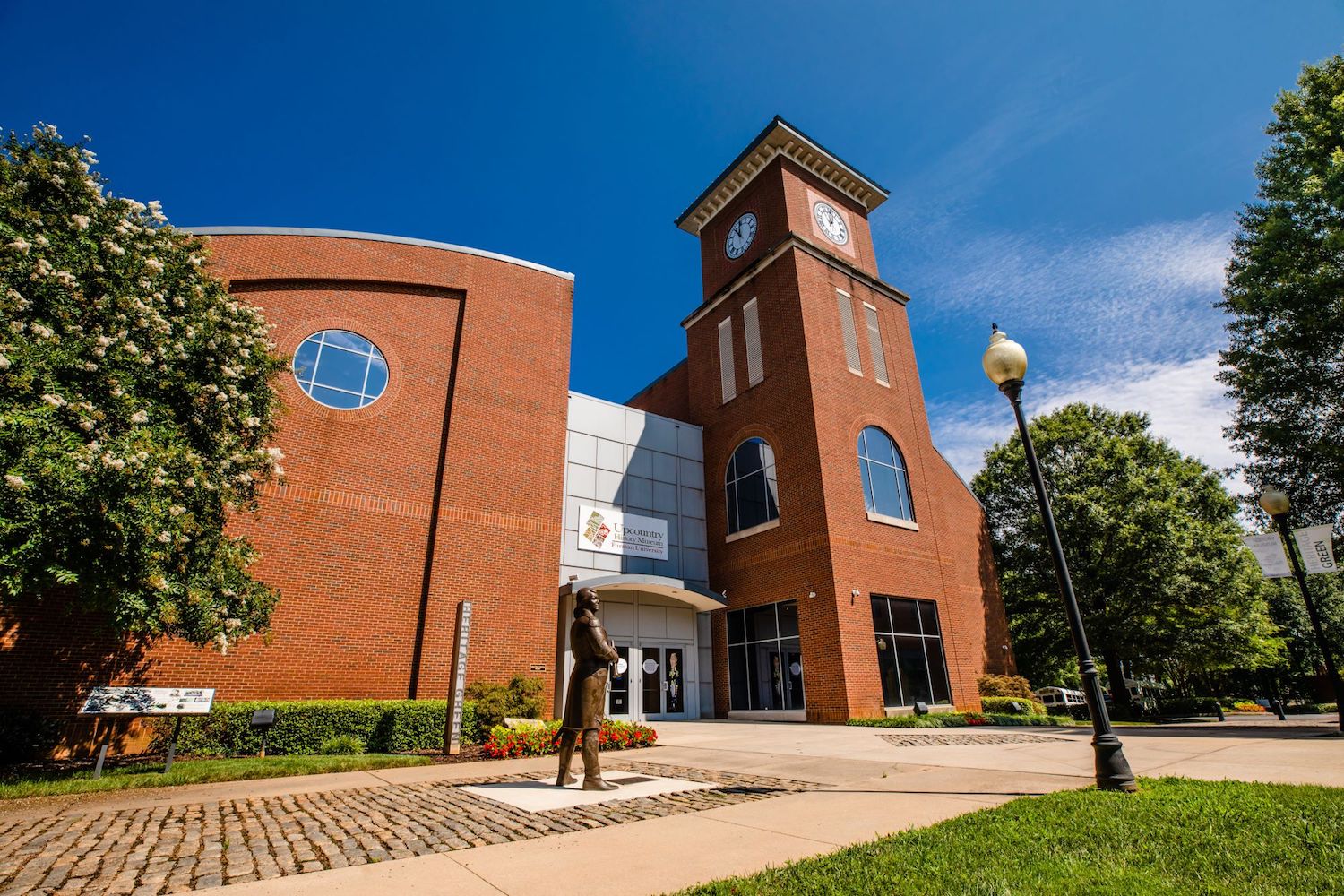
Image credit: upcountryhistory.org

From the museum’s website:

“When thinking about the American Wild West, many imagine characters from a classic western movie. But the reality is, the West is – and was – a melting pot. This ground-breaking exhibit fills in the mostly missing historical record of Black people in 19th-century America.”                                                                                                                – Dr. Carolyn Mazloomi

The Upcountry History Museum will invite visitors to experience a first-of-its kind exhibit when it hosts Black Pioneers: Legacy in the American West. The national touring exhibit, organized by The James Museum of Western & Wildlife Art, St. Petersburg, FL and Dr. Carolyn Mazloomi, artist, renowned historian and one of the foremost experts on African American quilting history and traditions, explores Black history in the American West.

The exhibit follows the path of Black history in the West through a timeline of original pictorial quilts. These colorful, richly detailed works of art chronicle the arrival of Africans in the American West in 1528, all the way through the Civil Rights Movement, bringing to life forgotten stories and lesser-known chapters in history. Dispelling the myth that Black people in the old West were mostly cowboys, Black Pioneers reveals the breadth of their occupations and achievements in society, religion, education, and the arts.

Quilts were chosen as the visual medium for the exhibit to highlight the intersections of African Americans in the Western Frontier while informing visitors about the art form and its important role in African American history. For African American women, quilts have always been at the core of artistic expression, taking form in the social, economic, and spiritual lives of the women who make them.

The 50 quilts, designed for the exhibit, were created by the Women of Color Quilters Network (WCQN) especially for the exhibition. Each quilt features a different Black pioneer, their life story researched and depicted in fabric by the quilt’s creator.

Founded by Dr. Carolyn Mazloomi in 1985, WCQN is a non-profit national organization whose mission is to educate, preserve, exhibit, promote and document quilts made by African Americans.

I have a lot of posts about this piece but you can check out my News page for more stories about the piece and the venues its been show.

Here’s a list of the 4 other museums the show has traveled/this quilt has shown:

If you’d like to see the Artist Statement for this piece it is as follows:

52″ W x 52″ L cotton, cotton flannel, image transfer fabric

THE STORY OF THIS PIECE:

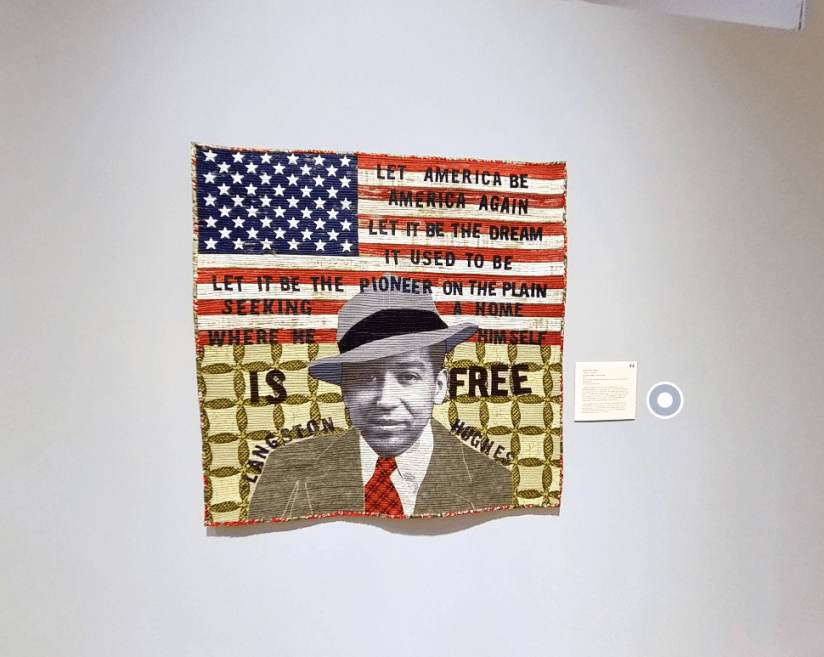
Decades before the political rhetoric of “Make America Great Again”, American poet, novelist, activist and playwright Langston Hughes (1902 – 1967) challenged us to “Let America Be America Again” in his poem named the same .

Langston Hughes was a leading figure in the Harlem Renaissance in the 1920s (Smithsonian.com) and his writings focused on the African American experience. He wrote the poem that inspired this quilt, Let America Be America Again, in 1935. It was first published by Esquire magazine in 1936 (classicesquire.com). Langston Hughes has a special significance to my family: he is the namesake of the first grandchild born into our family, Langston, named after his late grandmother Gina’s favorite poet.

This quilt shares the opening four lines of the poem’s first stanza which challenges “let America be the dream it used to be (for)…the pioneer”. These four lines are followed by a powerful statement in parenthesis: “(America was never America to me)”, summarizing the plight of African Americans historically not having access to the “American American .  The entire poem is powerful and worth a full reading (poem resource: Poets.org).

Using a B&W public archive image from the Smithsonian taken by photographer Carl Van Vechten in 1939, I recreated in cotton fabrics and image transfer fabric, a section of the scene from that photo, creatively reimagining his shirt to contain words representing he was a writer. In the backdrop of the image of Langston Hughes is the American Flag merged with African fabric to represent his African American heritage. The quilt is also bound with African fabric. Across the top of his hat I placed the word from the poem “pioneer” as I see Langston Hughes as a “Pioneer Poet”. He was the “pioneer on the plain” of writing relevant to the African American experience.

“Let America Be America Again” was written in 1935, however it remains quite relevant in 2021.

Allegedly the piece will stop touring after this 5th show and then it can return back home. I always have a wall section picked out for it in my house.

Shows and Exhibits

“Curator’s Corner” (Addendum to the post “Langston Hughes: Pioneer Poet moves onto the Stark Museum of Art”)

Addendum to my post earlier today: Langston Hughes: Pioneer Poet moves onto the Stark Museum of Art 

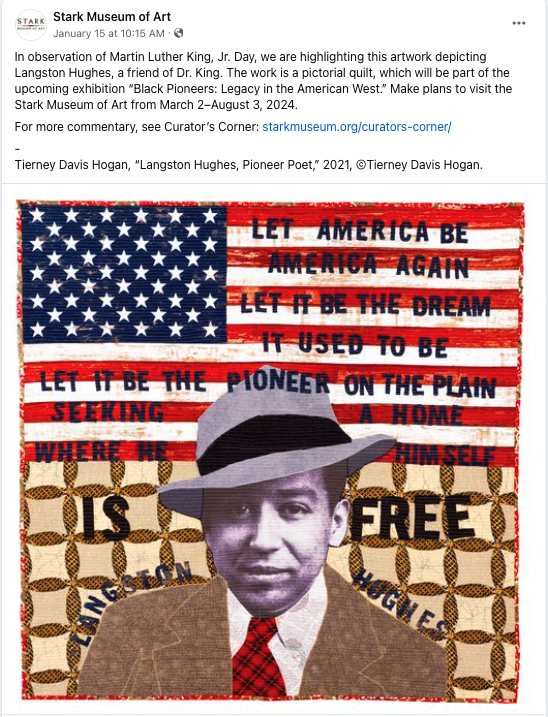
I discovered late today that the Stark Museum of Art posted about my quilt Langston Hughes: Pioneer Poet on their Facebook page:

image credit: Stark Museum of Art Facebook page

And then I went onto discover the museum’s Curator, Sarah E. Boehme, Ph.D., discusses the quilt in her Curator’s Corner page on the Stark Museum of Art‘s website:

image credit: Stark Museum of Art website

If you go to the Curator’s Corner page and scroll past her February 2, 2024 discussion of John James Audubon, “Maryland Marmot, Woodchuck, Groundhog” you will see the January 15, 2024 entry about my quilt:


January 15, 2024

“Langston Hughes, Pioneer Poet”

Langston Hughes (1902-1967) was an author and activist, born in Joplin, Missouri.  He is known for his powerful poetry and as a leader of the Harlem Renaissance, the flourishing of Black culture that developed in New York City.  

Artist Tierney Davis Hogan depicted Langston Hughes for the exhibition “Black Pioneers:  Legacy in the American West.” She wrote an artist statement about this quilt for the exhibition catalog accompanying “Black Pioneers.” 

Tierney Davis Hogan chose to portray Hughes for this exhibition, seeing him as a pioneer poet.  She used a photograph of Hughes by Carl Van Vechten from the Library of Congress and reimagined it.  She layered the likeness over an American flag and an African fabric to visualize Hughes’s identity as an African American.  She stressed his role as a poet by incorporating words of Langston Hughes’s poetry into her art.  Hogan reshaped four lines from the 86 lines of the poem “Let America Be America.”  

Hogan lined the poem’s words along the stripes of the American flag, seemingly to emphasize the call to respond to American ideals.  She arranged the wording so that “pioneer” appears directly over the head of Hughes.  The final two words of the poem, “is free,” appear upon the African fabric, stressing the importance of freedom, especially for African Americans.  Hogan noted the continuing relevance of Hughes poem, which was written in 1935, and encouraged the reading of “Let America Be America” in its entirety. 

The four lines of poetry that Hogan used include a dream reference.  Scholars believe that Hughes’s poetry influenced the imagery in Martin Luther King Jr.’s speeches.  The two men were friends and maintained a correspondence for many years.  Hughes wrote a reference to Dr. King in his poem “Brotherly Love.”
Langston Hughes has a connection to Orange, Texas.  In 1945, he spoke at the Salem Methodist Church.  Local historian Margaret Toal has written about Hughes’ visit for KOGT radio and noted that the newspaper “The Orange Leader” carried a front-page story about the poet’s upcoming visit. During his time in Orange, Hughes autographed a printed copy of one of his poems for local civil rights leader Velma Jeter. 


Quite the surprise!


Feature image credit: Stark Museum of Art

Shows and Exhibits, WCQN

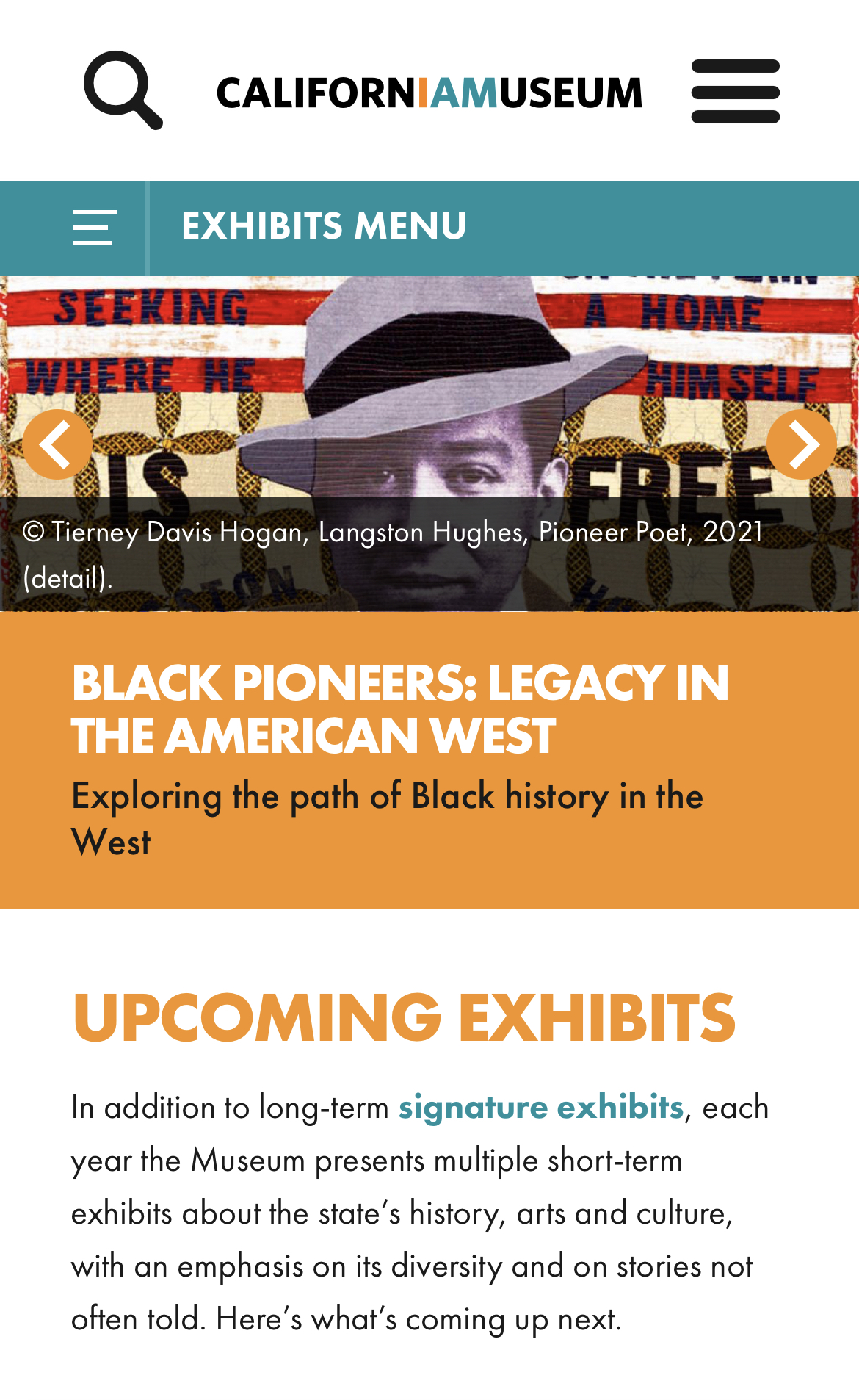
Coming to the California Museum

I was updating my tierneycreates News page (the latest information on my art quilting adventures) with this information and I thought I would also share it as a quick blog post.

I recently discovered that my quilt Langston Hughes: Pioneer Poet is one of the quilts featured on the California Museum’s Upcoming Exhibits page.

Below are screenshots from the web on a computer and then on a mobile app:

So honored to have my quilt featured again in the advertising for this venue for the touring exhibit Black Pioneers; Legacy in the American West.

The exhibit at the California Museum runs June 17th – October 1st 2023.

Shows and Exhibits

Langston Hughes Quilt at Booth Museum

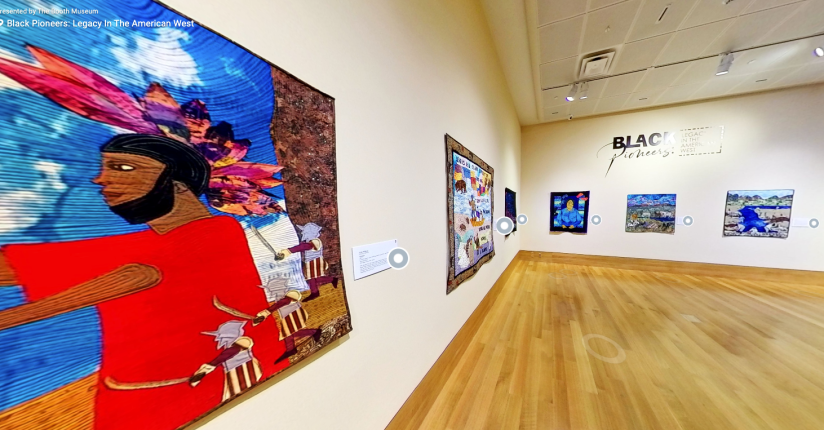
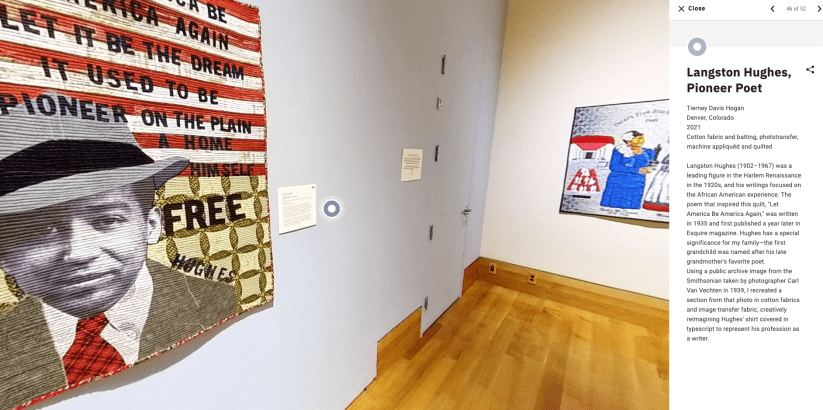
My art quilt, Langston Hughes: Pioneer Poet now exhibiting at the Booth Western Art Museum in Cartersville, Georgia (outside of Atlanta, GA) as part of the WCQN show Black Pioneers: Legacy in the American West

The show opened on January 28, 2023 and runs through May 21, 2023, and curated by Women of Color Quilting Network (WCQN) founder Dr. Carolyn Mazloomi. I was not able to attend the show opening due to my broken ankle and subsequent surgery. (I did attend the show’s first opening at The James Museum of Western & Wildlife Art in St. Petersburg, FL in January 2022 – Black Pioneers: Legacy in the American West show opening weekend, Part I )

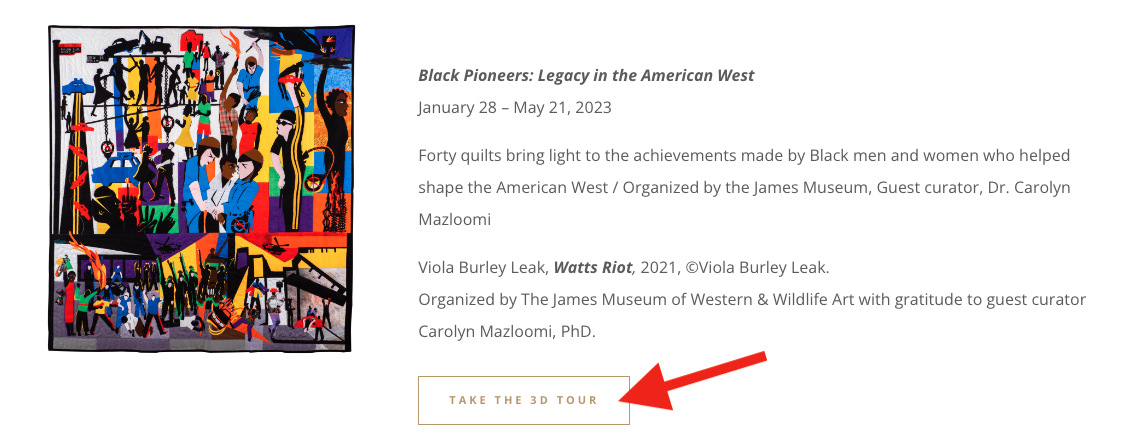
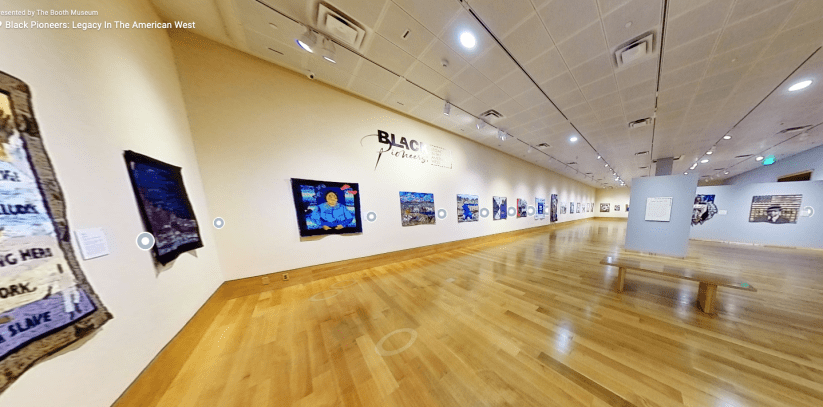
On the Booth Museum’s website they have a 3D Tour of the exhibit:

Here are some screenshots which include my quilt:

I appreciated being able to virtually see the show/exhibit since I could not attend the show opening.

This is the second venue for this exhibit/show, there are two more venues to go:

Shows and Exhibits, WCQN

Black Pioneers: Legacy in the American West show opening weekend, Part III

Here is the final installment in my series of posts about opening weekend of the Women of Color Quilting Network (WCQN) show Black Pioneers: Legacy in the American West at the James Museum in St. Petersburg, Florida where my quilt Langston Hughes, Pioneer Poet was showing.

If you are just joining us, here are the two previous related posts:

Black Pioneers: Legacy in the American West show opening weekend, Part I 

Black Pioneers: Legacy in the American West show opening weekend, Part II 

Before I share more about the show’s opening weekend, here is a little about my time in St. Petersburg, Florida.

WANDERING AROUND ST. PETERSBURG

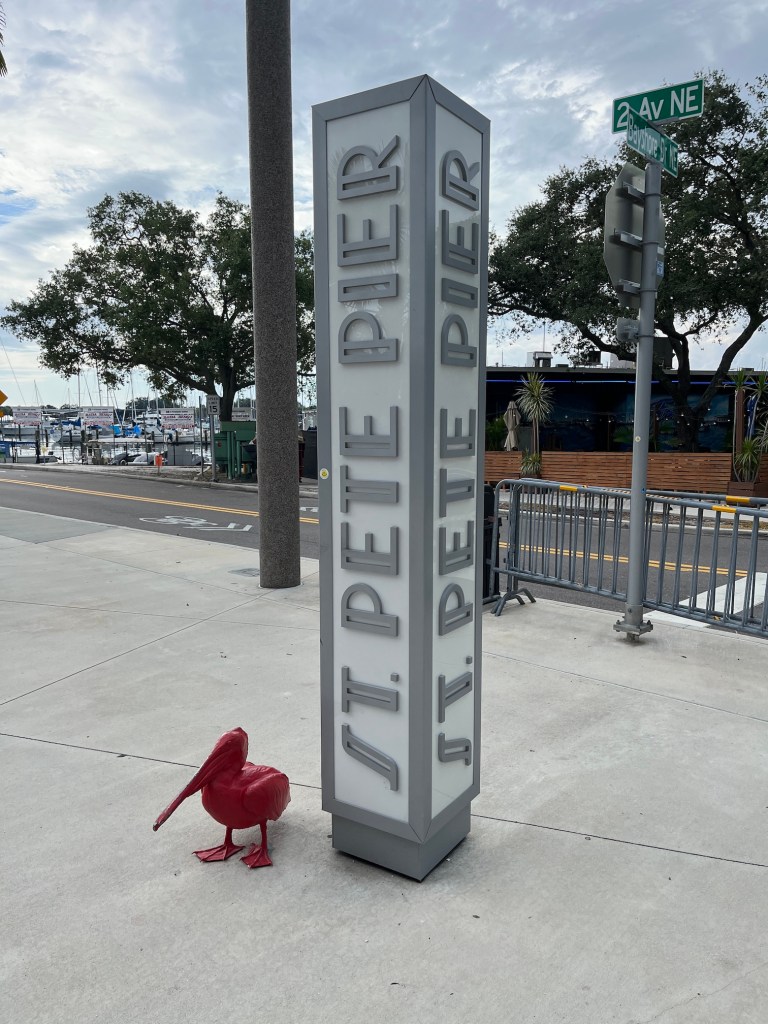
I’ve been to several cities in Florida in the past, but I do not remember ever visiting St. Petersburg, so let’s call it my first visit to St. Petersburg, FL. The James Museum is located in downtown St. Petersburg and although my partner John and I had a rental car, we primarily explored the downtown area where our hotel was also located.

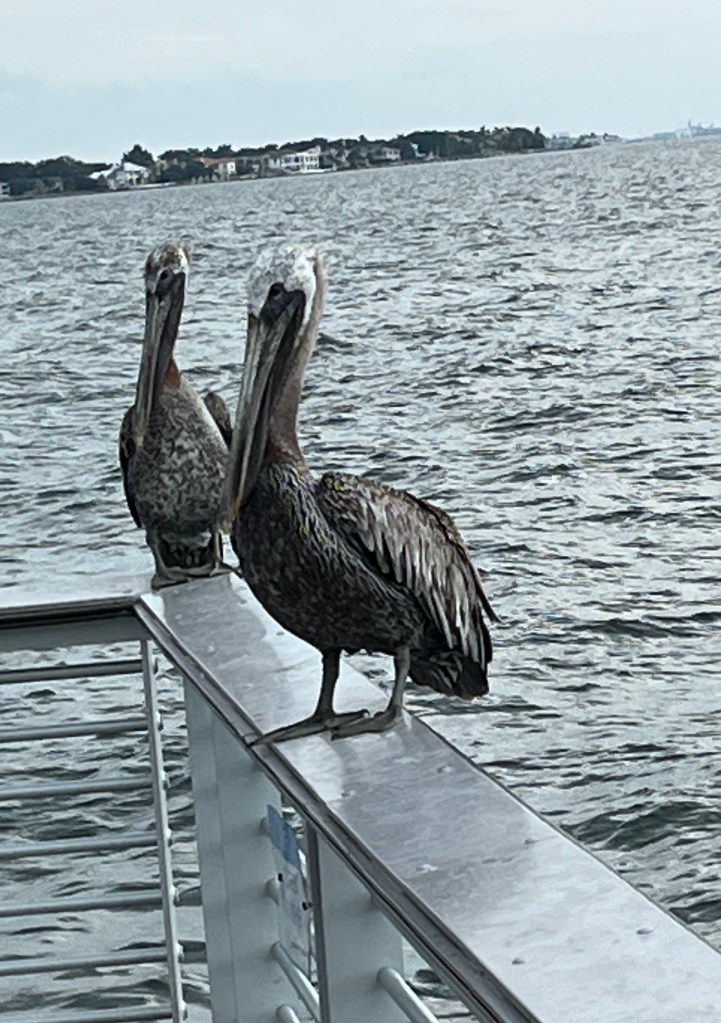
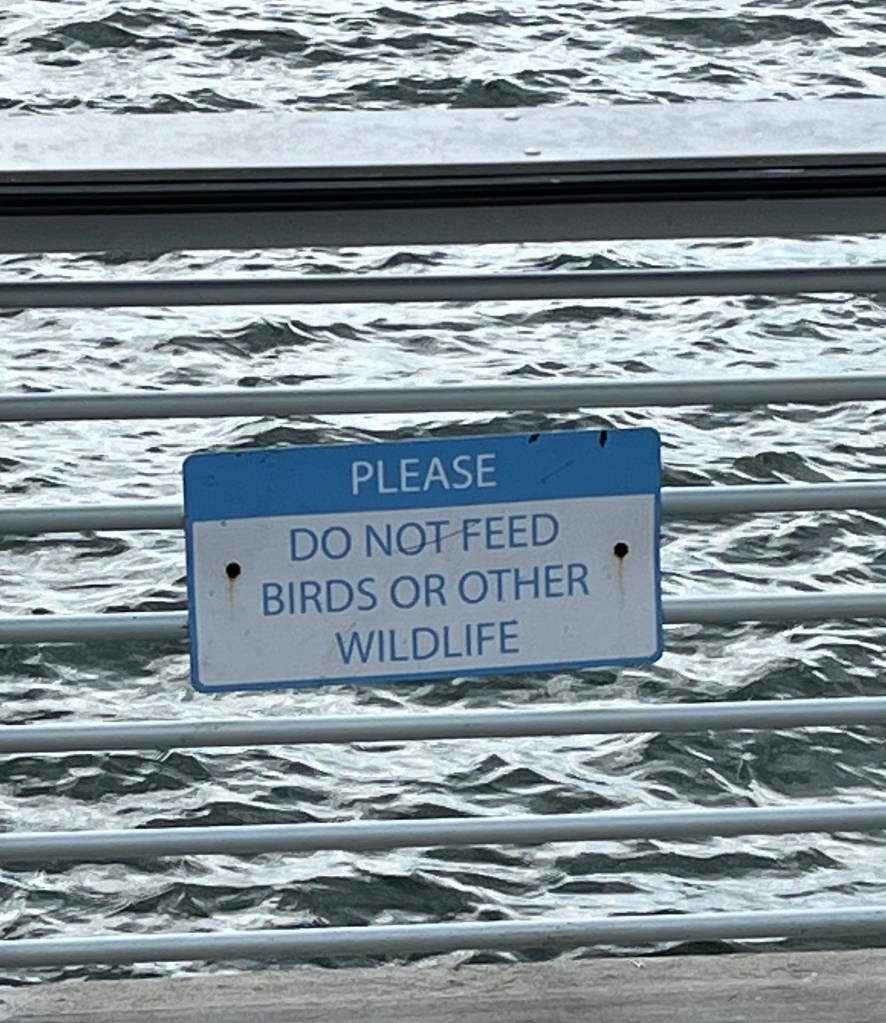
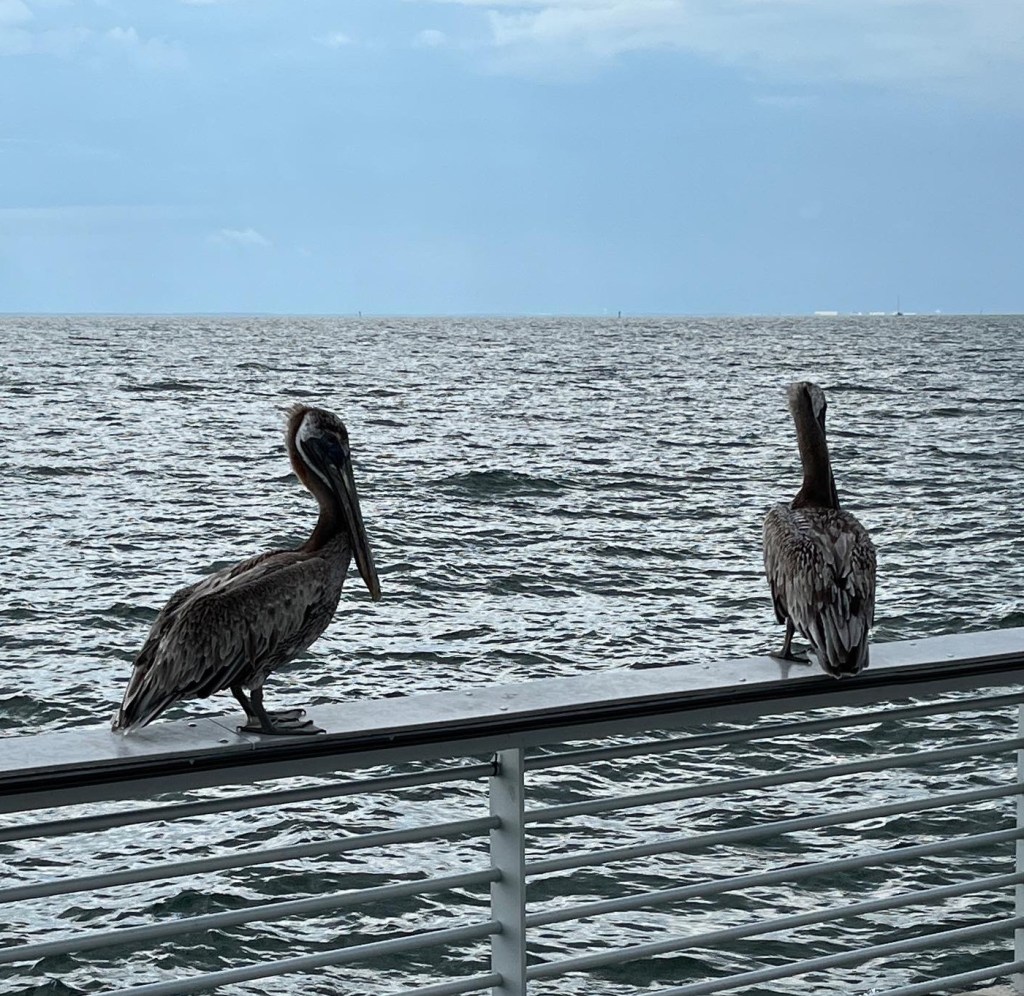
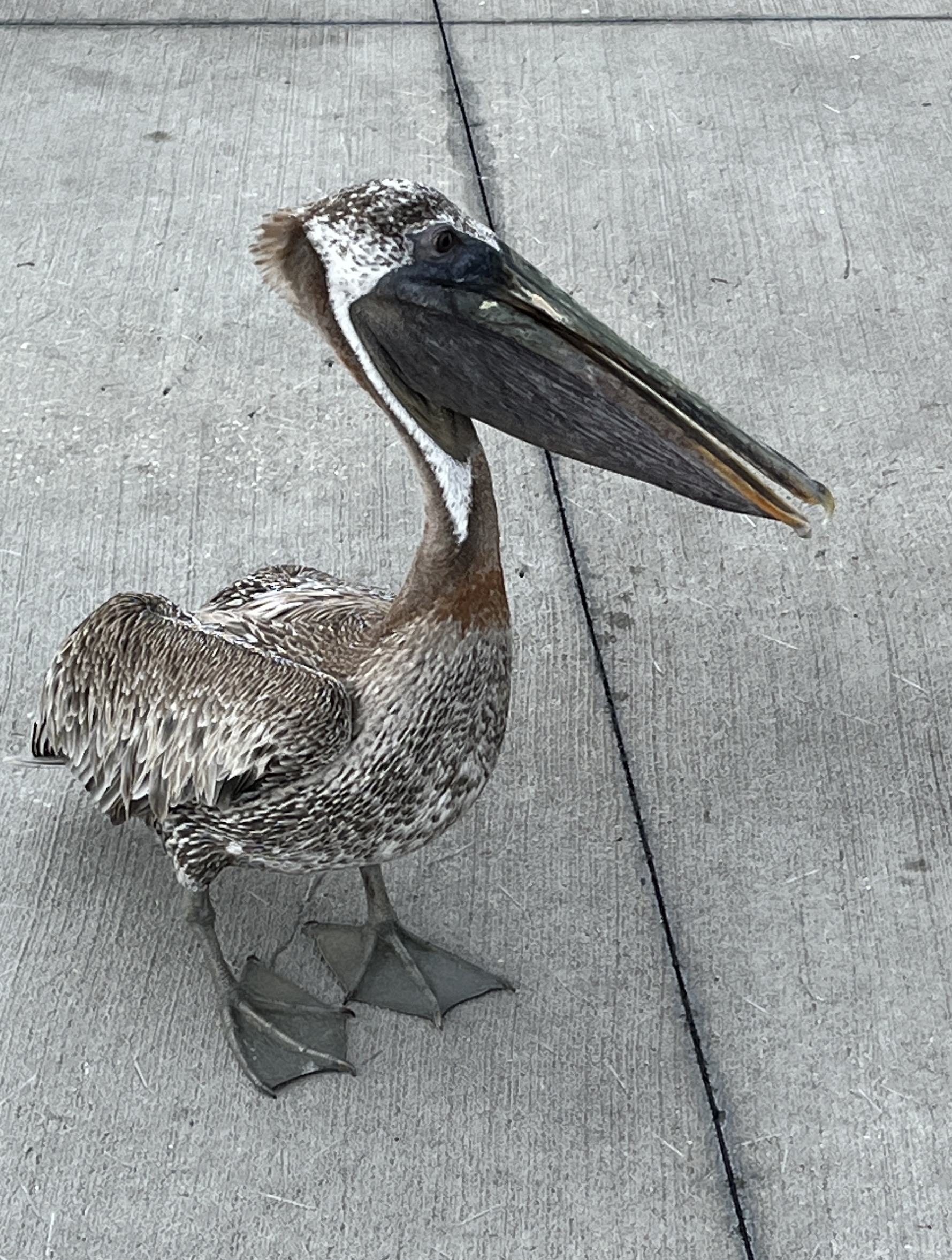
One day between opening weekend events, we walked down to the pier area and ran into some very friendly pelicans hoping for us to feed them (which we didn’t – we listened to the posted sign!)

One of the pelicans was following me around and after a while appeared annoyed that I hadn’t fed her/him yet!

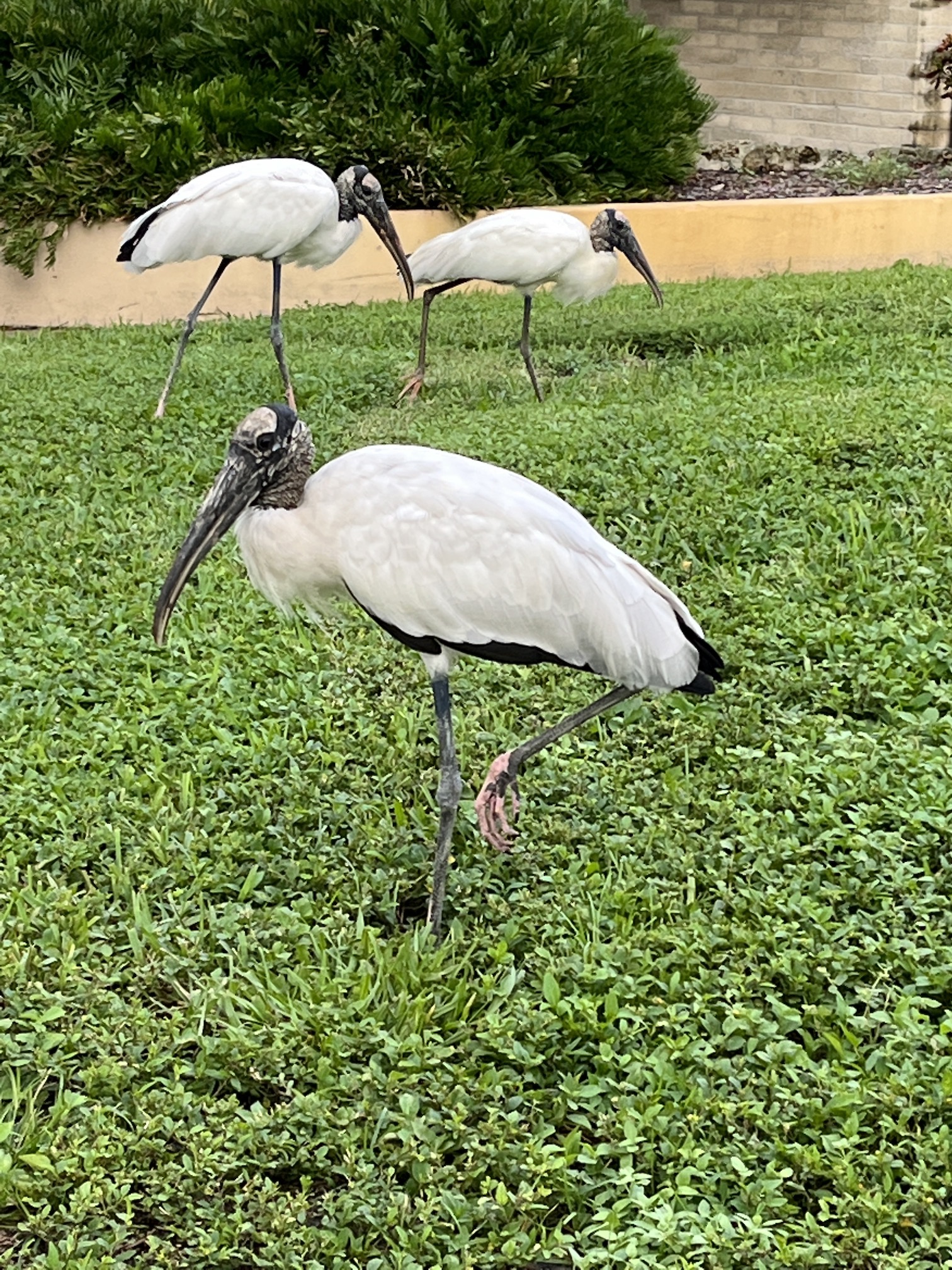
There was all sorts of interesting birds wandering around downtown St. Petersburg, here are some curious birds we ran into at a public park:

They were sort of flamingo like but I am not sure if they are in the same family. If you know what they are, let me know!

And of course I had to take some Black & White photos while wandering downtown St. Petersburg, here is my favorite of the photos I took (the rest were “nothing to write home about” so I will spare you a B&W photo essay of downtown St. Petersburg):

John and I had lunch one day and a fun restaurant, Oak and Stone, that featured a self-sampling craft beer area where you got a wrist band that you scanned and selected whatever sampler craft beers you wanted (though they did have a limit of how many samples you could buy during one visit!). Each tap had information about the craft brew selection.

We had a lot of fun sampling beers!

John and I discovered that St. Petersburg has an unusually large number of museums for its size of city – 31! We joked that since there is a lot of wealth in St. Petersburg, “everyone and their brother” wanted to have their own museum!

And now we’ll return to the show’s opening weekend.

BLACK PIONEERS SHOW OPENING WEEKEND CONTINUED

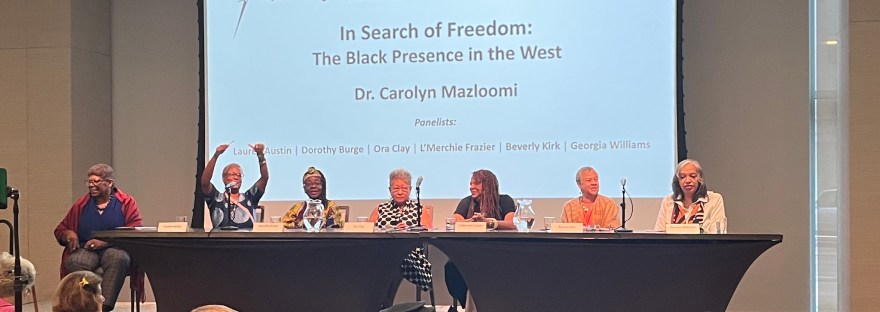
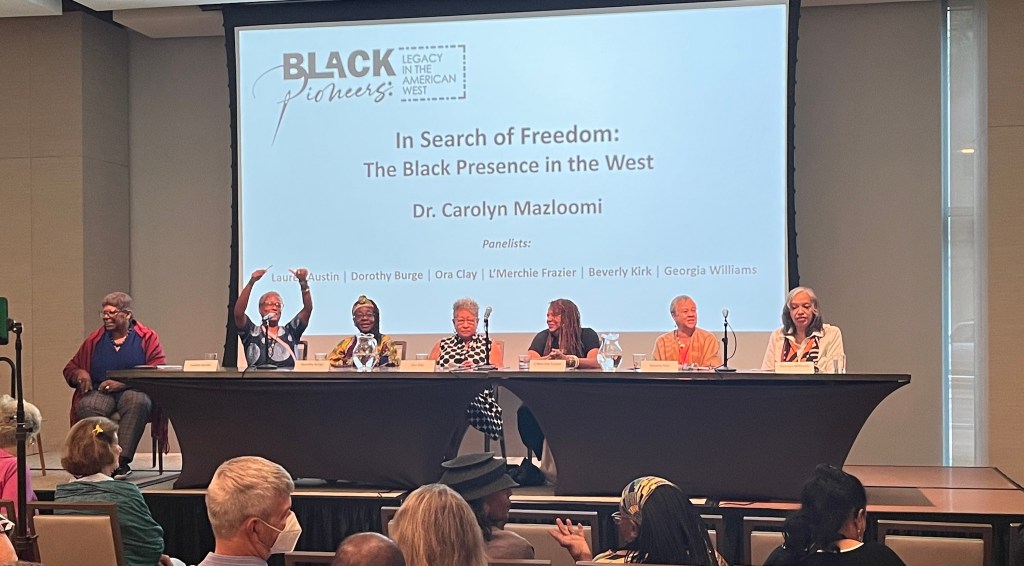
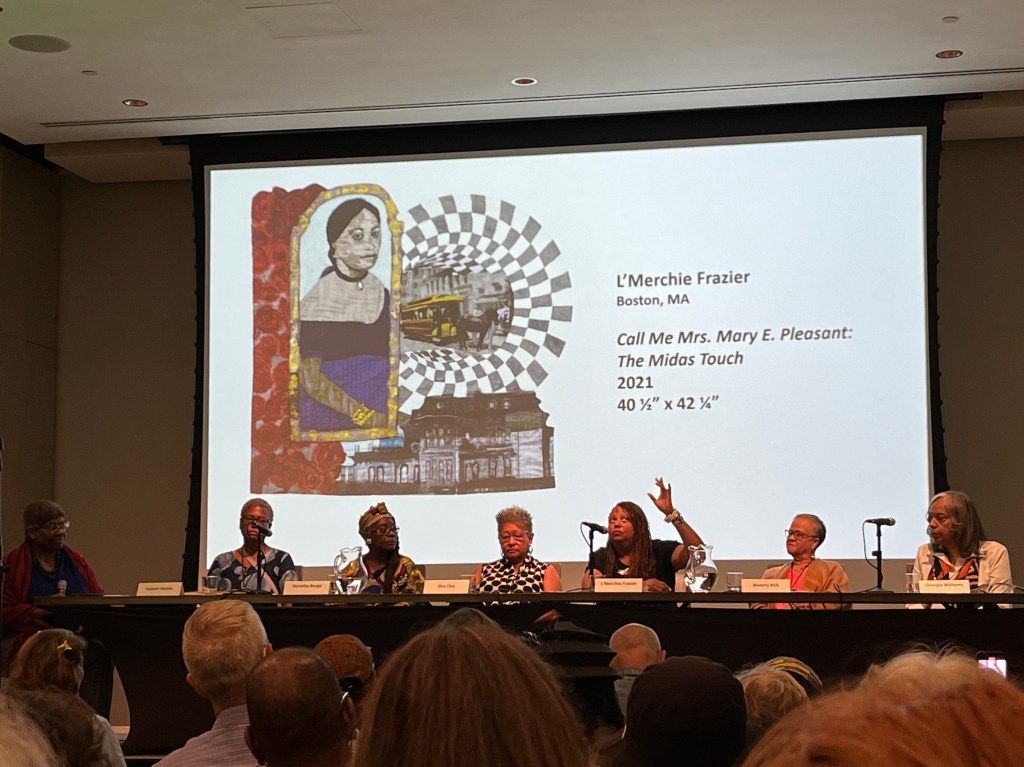
On Sunday September 11, 2022 the museum held a brunch for the artists and the show’s sponsors. After the brunch there was a panel presentation with the show’s curator Dr. Carolyn Mazloomi and 6 of the artists discussing the topic “In Search of Freedom: The Black Presence in the West”.

Each artist discussed their piece in depth and responded to Dr. Mazloomi’s discussion questions about the topic. It was an amazing panel presentation by amazing women. The women in the panel are educators, college professors, a civil rights attorney, historians, and professional artists. Dr. Mazloomi is a retired aerospace engineer and she was not the only PhD level educated artist in the room.

Some of the members of the WCQN have art quilts permanently installed at the Smithsonian Museum and the National Museum of African American History and Culture in Washington, DC.

I cannot begin to put in to words how it felt to interact with this entire group of talented and brilliant women that are part of WCQN during the Black Pioneers show’s opening weekend. Here is the group photo I shared in the previous post about the show opening:

image credit: James Museum facebook page

How lucky I felt to stand among this group of women! I had so many engaging conversations with the other artists during the show’s opening weekend and there are rumors that in the future we might have WCQN artist retreats and I cannot wait to be in their presence again!

If you’d like to read about how I first got involved with the WCQN, this post tells the story – Creative Inspiration: Stories My Father Told Me (re-post). Thank you Universe for letting me run across that magazine that led me to reaching out to Dr. Mazloomi while browsing at Barnes & Nobles in 2016!

I will close this series of posts with this recent interview of Dr. Mazloomi, a National Heritage Fellow of the National Endowment for the Arts (highest award given in the U.S. to an artist), that played on a loop on one of the museum’s walls during the exhibit. I think it is worth a listen.

We as African Americans have participated in the making of this country since we stepped off the boat. African Americans have been explorers, they’ve been business people, they were cowboys, they’ve been part of the fabric of every facet of this country and people will see that the quilts…Quilts have jumped off the bed onto the wall and they are now seen as works of art…these are not the quilts that your grandmother made, they are truly seen as works of art…with the use of cloth we tell the stories not only of our cultures but the making of America…

Carolyn Mazloomi
Shows and Exhibits, WCQN

Black Pioneers: Legacy in the American West show opening weekend, Part I

Last Friday, John and I headed to St. Petersburg Florida for the opening weekend of the show Black Pioneers: Legacy in the American West at the James Museum of Western & Wildlife Art.

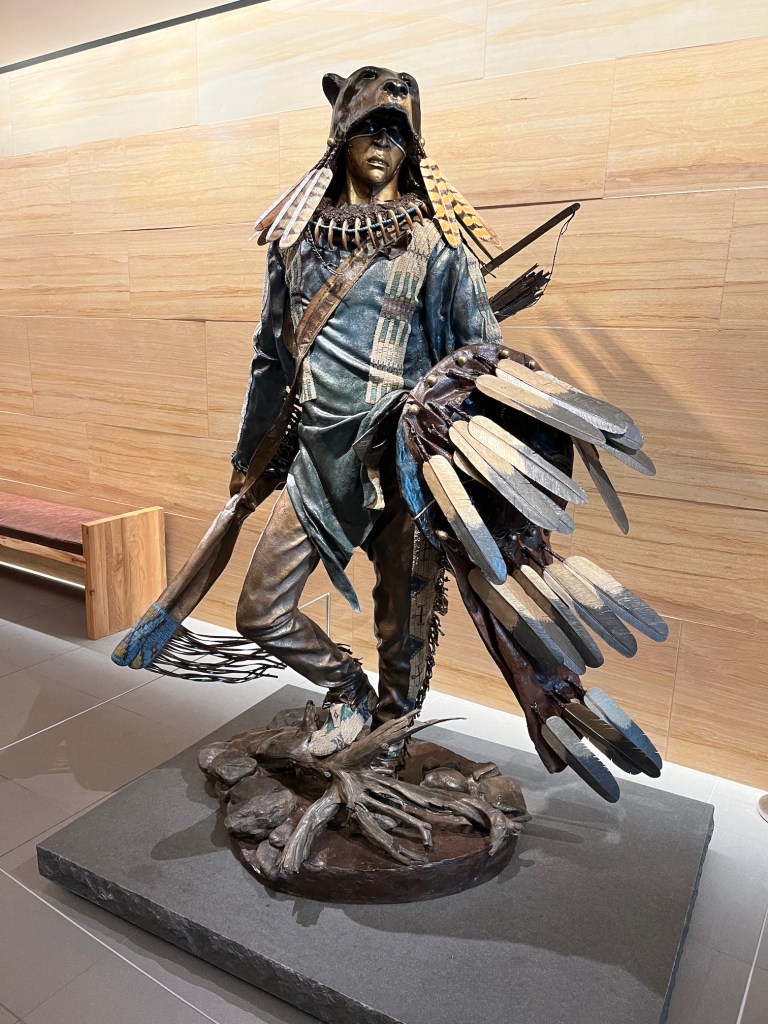
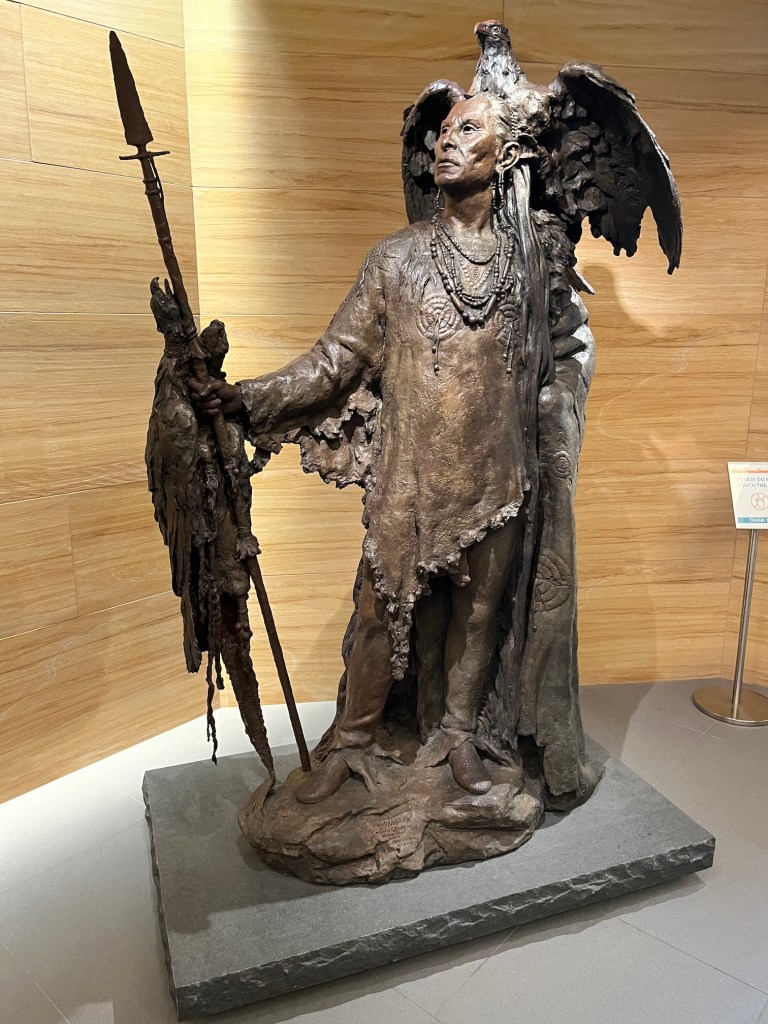
The museum is really gorgeous inside (the Executive Director told us it cost 65 million to build and 5 million a year to maintain…) and filled with some amazing Western themed art, especially a lot of Native American themed art:

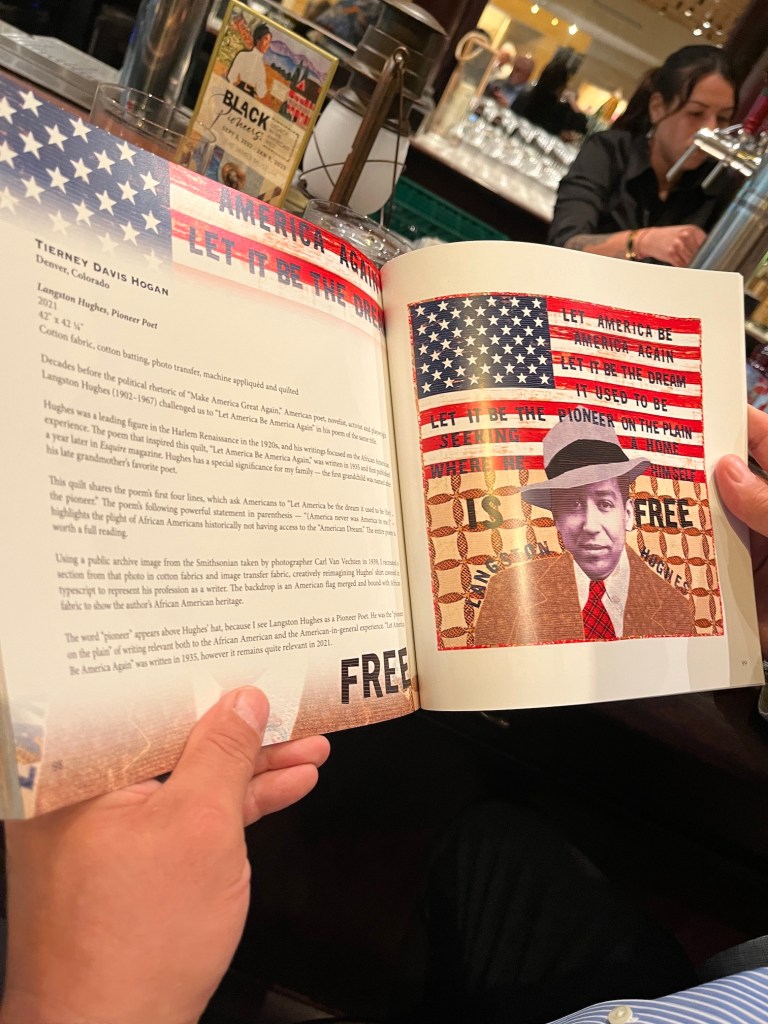
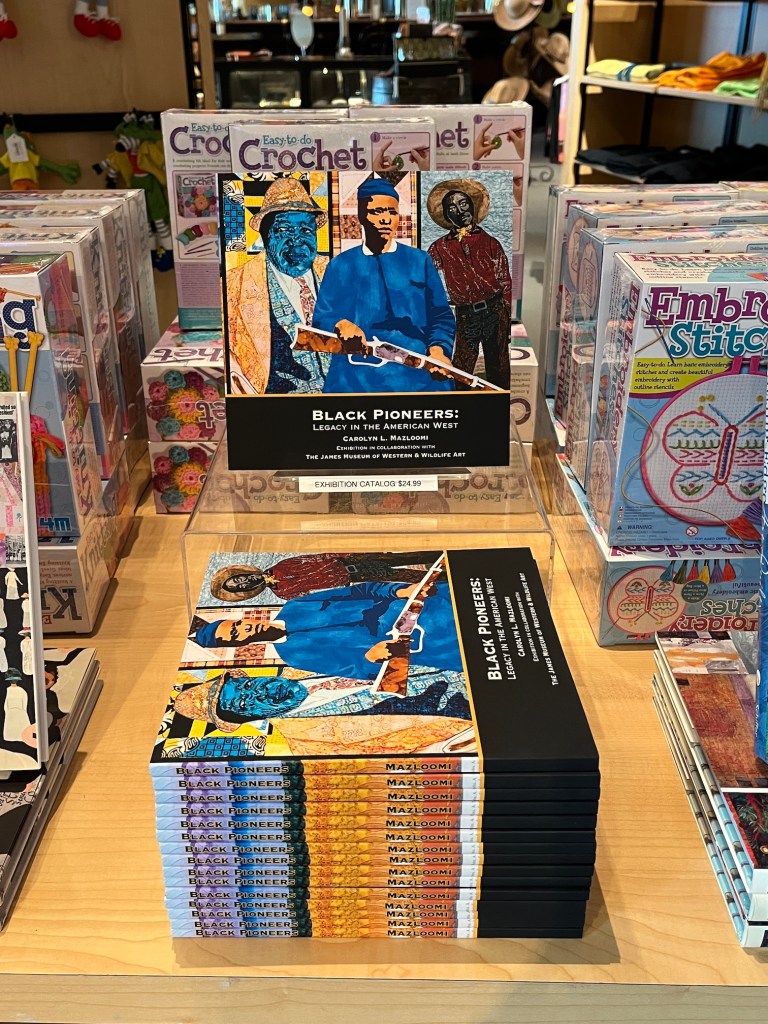
When we first arrived to the opening night reception on Friday, our first stop was the museum gift shop to pick up extra copies of the exhibit catalogue (they gave each artist a complimentary copy):

And we plopped ourselves down at the museum’s cafe/bar area with our complimentary adult beverage and thumbed through the catalogue to find my piece!

Yes, I won’t lie, it was pretty exciting!

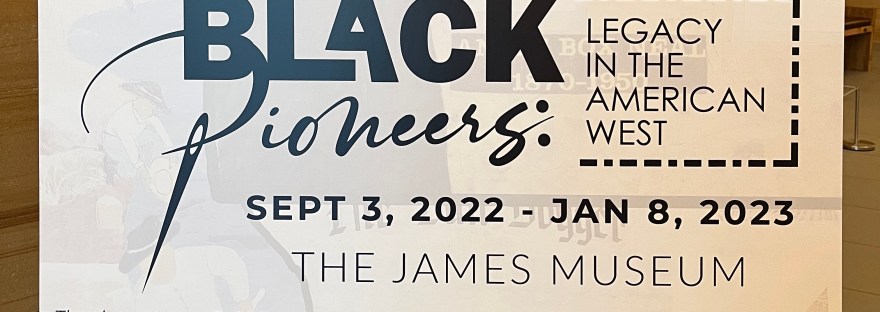
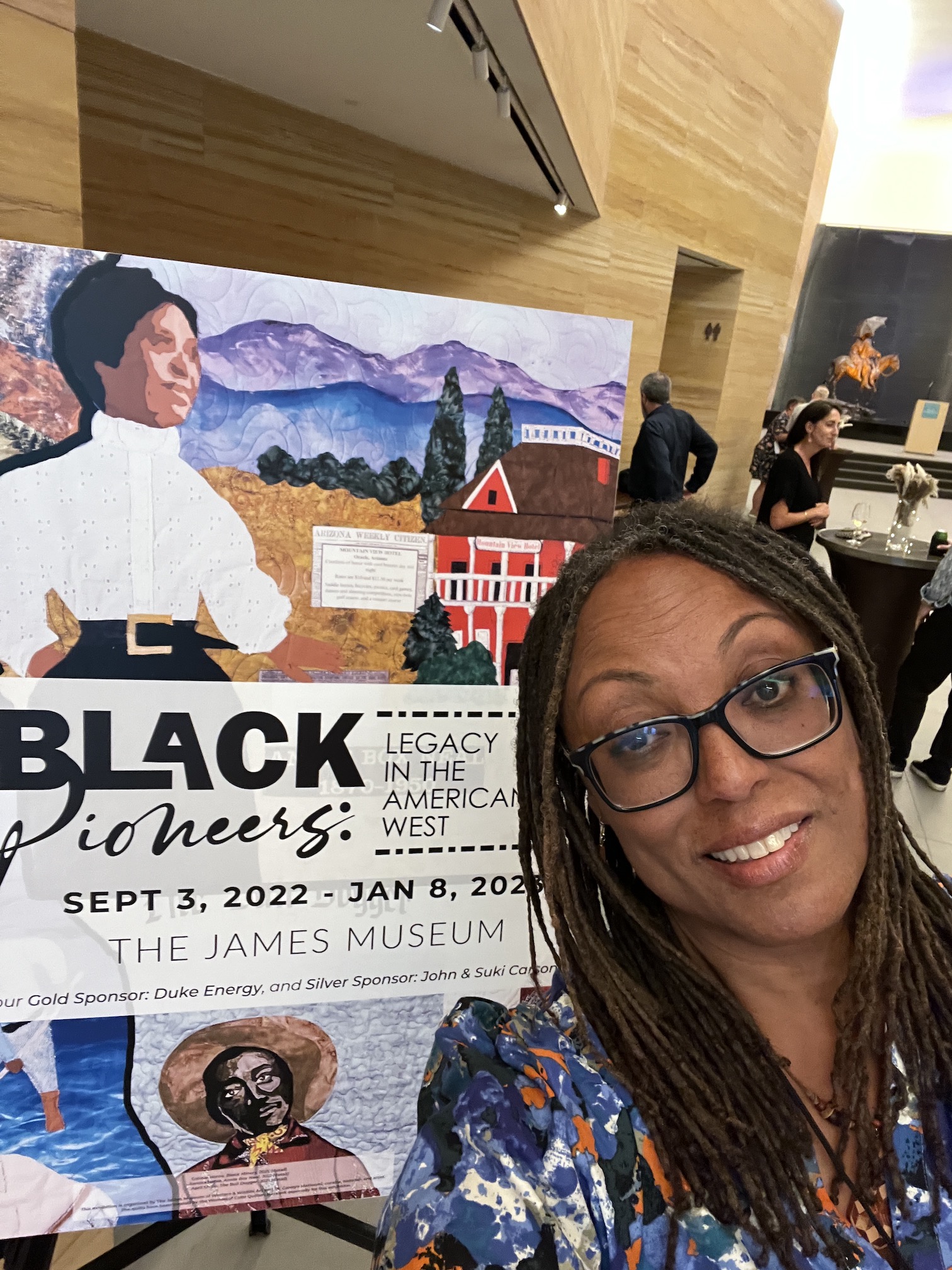
After getting snacks at the cocktail reception, before we headed upstairs to the exhibit I stopped to pose with the exhibit poster sign:

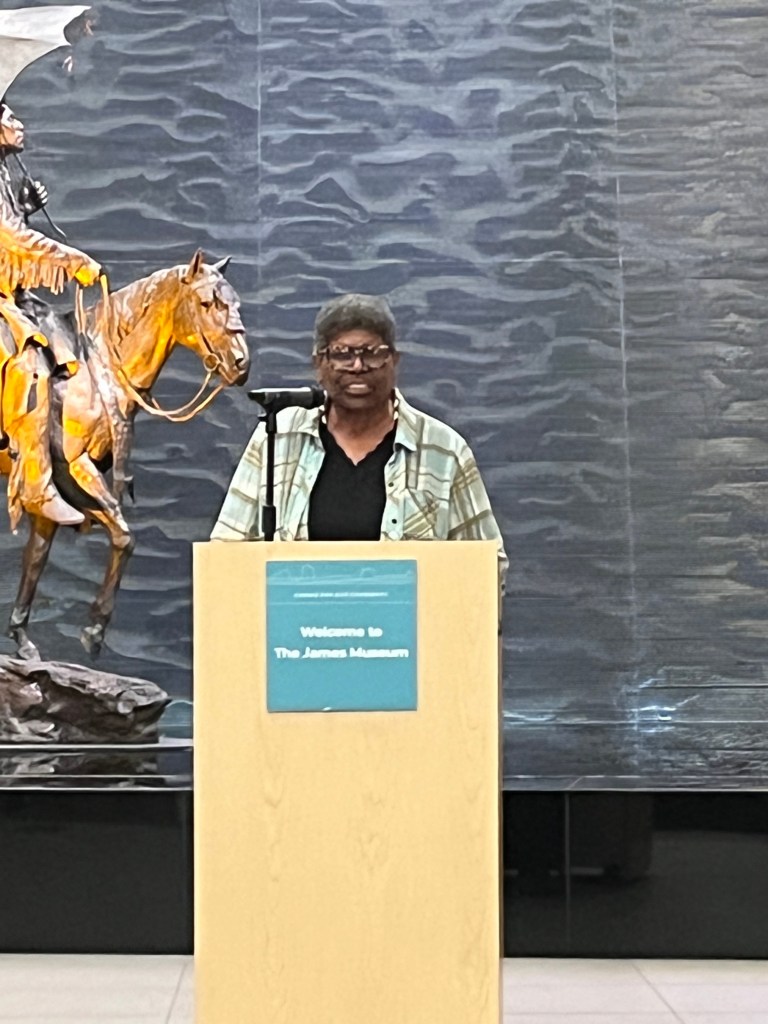
Dr. Carolyn Mazloomi, the show’s curator and the founder of the Women of Color Quilting Network (WCQN) spoke at in the main hall stage at the museum during the reception and had all the artists come up on stage with her after her presentation:

Then it was time to go upstairs and see the exhibit! You’ll never guess what I did first – yes, find my piece on the wall and start taking photos:

Note: The museum placard for my piece is an abbreviated version of my full artist statement. If you’d like to read the entire artist statement, see the post Update on the Langston Hughes, Pioneer Poet Quilt.

I also had Dr. Mazloomi sign my exhibit catalogue and took a photo with her:

I am so honored that she responded to my inquiry years ago about WCQN. I am so proud to be a member! So far I’ve been in two other shows: Visioning Human Rights in the New Millennium (see post Visioning Human Rights in the New Millennium, Part IV), and Yours for Race and Country: Reflections on the Life of Colonel Charles Young (see post Secret Quilt Revealed, Part II: Yours for Race and Country).

This is the second show opening I attended, I did not attend the one for Yours for Race and Country: Reflections on the Life of Colonel Charles Young as my husband had recently died and although I was so honored to be in the show I was not emotionally ready to attend events like that. I am so happy I got to attend the opening for Black Pioneers: Legacy in the American West, and it was awesome to have my partner John there with me (and he acted as my photographer when I was in group shots or busy talking to show visitors.

I am going to close Part I of this series of posts about the show with a less than a minute walk through video of the show on Instagram and a longer version (over 3 minutes) on YouTube that John took. More to come in future posts in this series to include some close up images of several of the amazing quilts in the show!

I accidentally deleted the minute long video I took landscape perspective after I loaded it to Instagram (and I even figured out how to set it to music), so darn it I could not load it on to YouTube!

Shows and Exhibits, WCQN

Black Pioneers: Legacy in the American West (upcoming exhibit)

In my post from late September 2021, Secret Quilt and Design Wall Struggle, I mentioned that I had completed an art quilt for a Women of Color Quilting Network (WCQN) show opening in 2022, but I could not yet share images of the quilt.

I was recently contacted by The James Museum who asked for me to sign an image copyright release for my quilt. They said it was to use images of the quilt for promotional purposes. I immediately signed the release but I was not sure what would happen next.

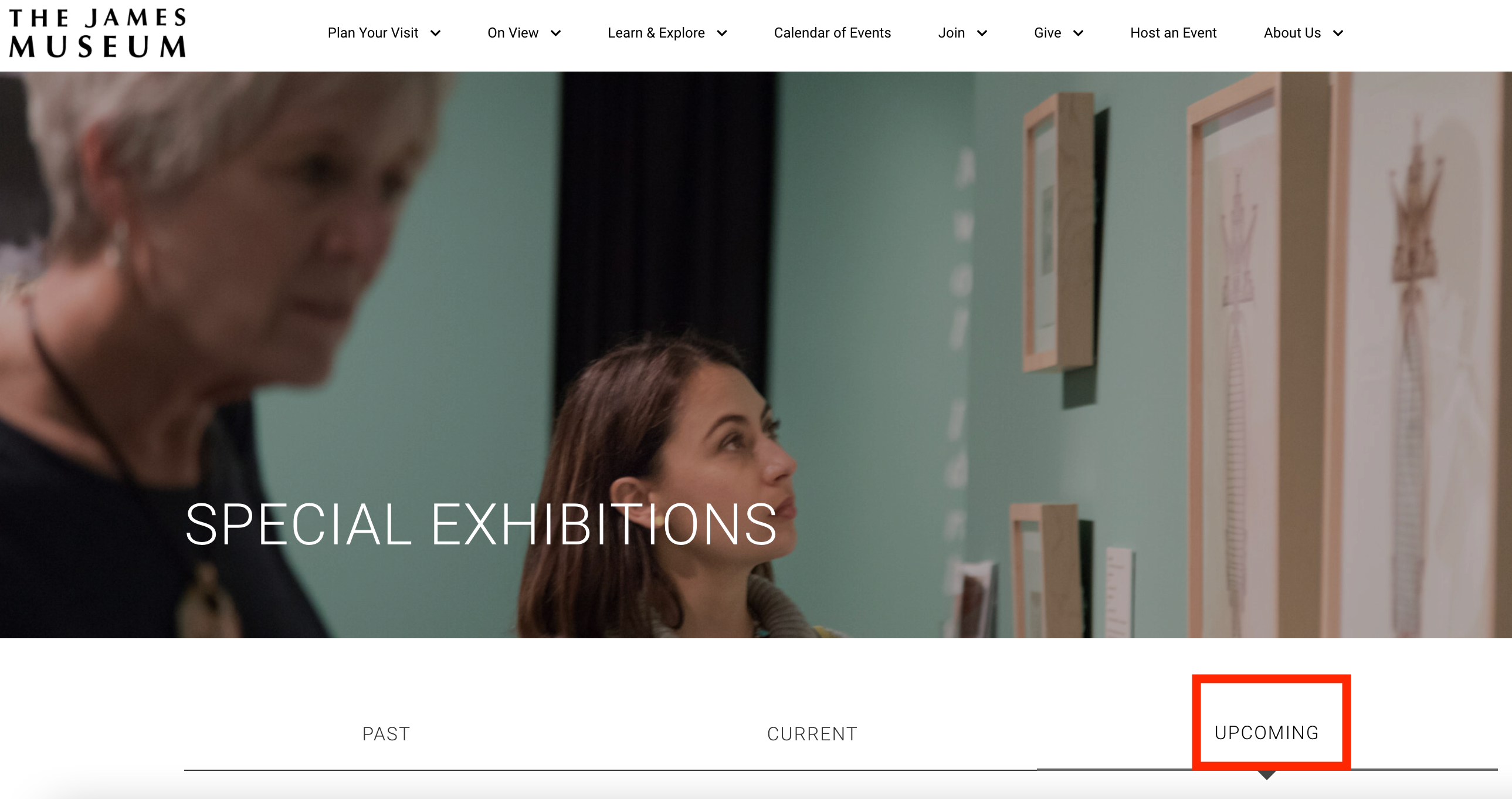
To my ecstatic surprise the museum contacted me a day or so later with the link to their listing of Special Exhibitions > Upcoming shows and my quilt was featured for the upcoming exhibit: Black Pioneers: Legacy in the American West!

thejamesmuseum.org/special-exhibitions/

If you scroll down to “Upcoming”…

image credit: The James Museum

You will see the quilt I made plus and overview about the future show!

Image credit: The James Museum

I am sharing this with you as it is on a public facing website. I’ll wait until the show opens next year to share photos of the quilt and my creation of the quilt; as well as my Artist Statement. I don’t want to give anything away from the show’s opening in September 2022 (no longer April 2022, now September).

I can tell you that I was inspired by Langston Hughes’ amazing poem – Let America Be America Again. You can read the entire poem at this website:

poets.org/poem/let-america-be-america-again

This poem was written in the 1930s but to me feels relevant still today.

Dr. Carolyn Mazloomi, the show’s curator and head of the WCQN, will likely publish a book about the exhibit like she has done on other amazing WCQN exhibits. Here is her amazon page – Carolyn Mazloomi.

I feel very fortunate to have an art quilt in one of those books – Visioning Human Rights in the New Millennium: Quilting the World’s Conscience (2019), and I look forward to having my quilt in the book about this new exhibit (if she publishes a book).


Featured image credit – The James Museum