
This morning’s post is a follow up “What’s on the Design Wall…a “Hot Mess”?”
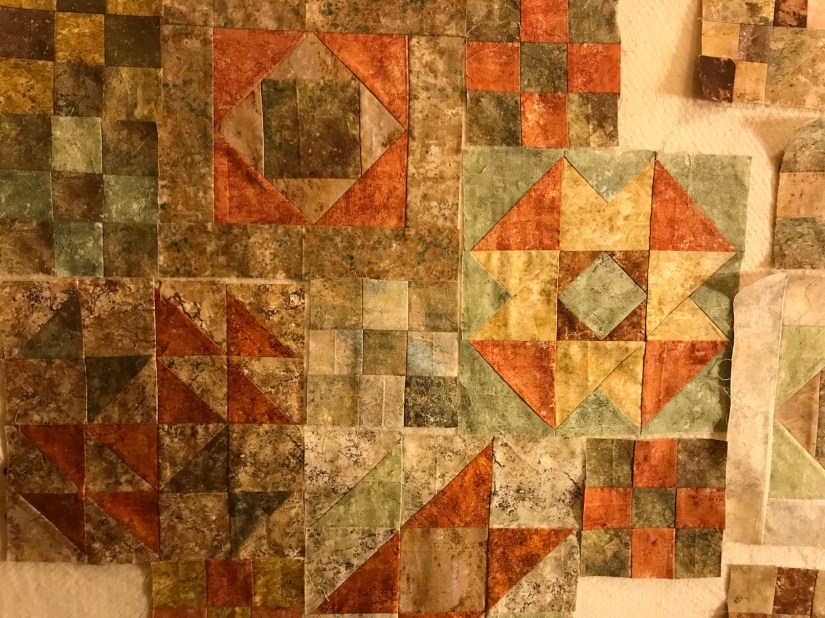
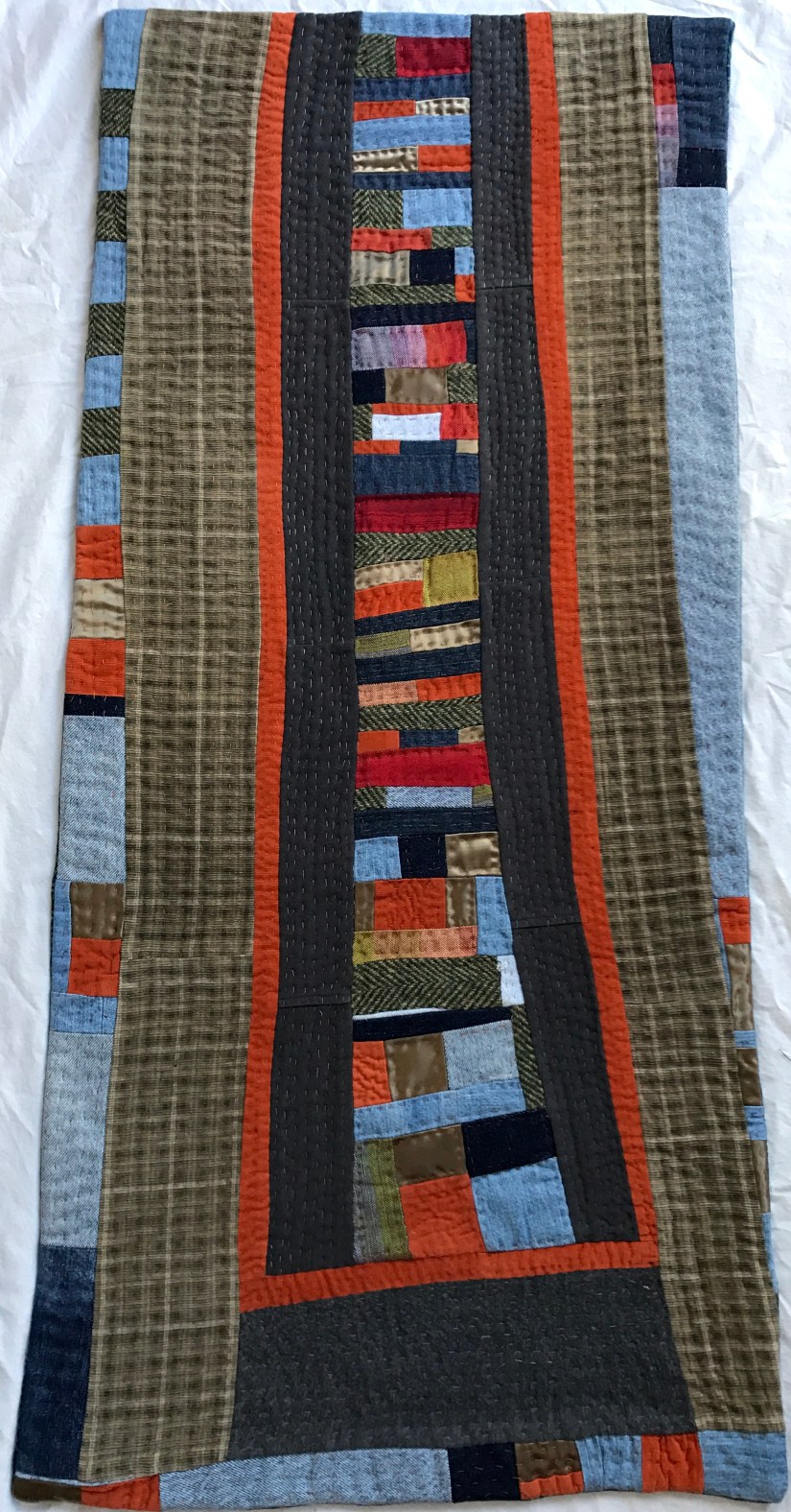
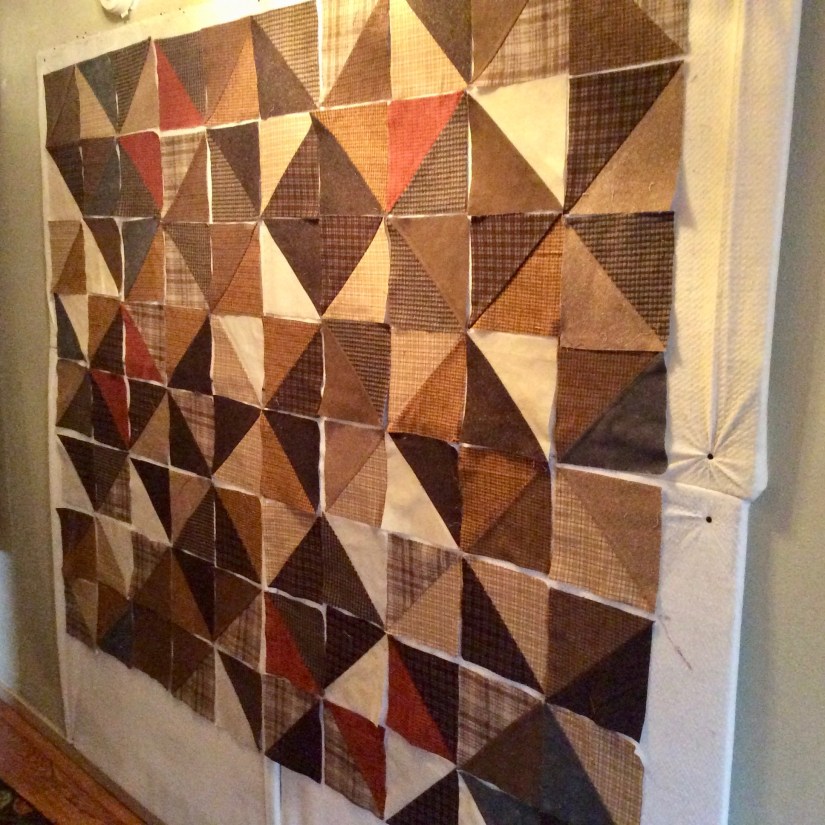
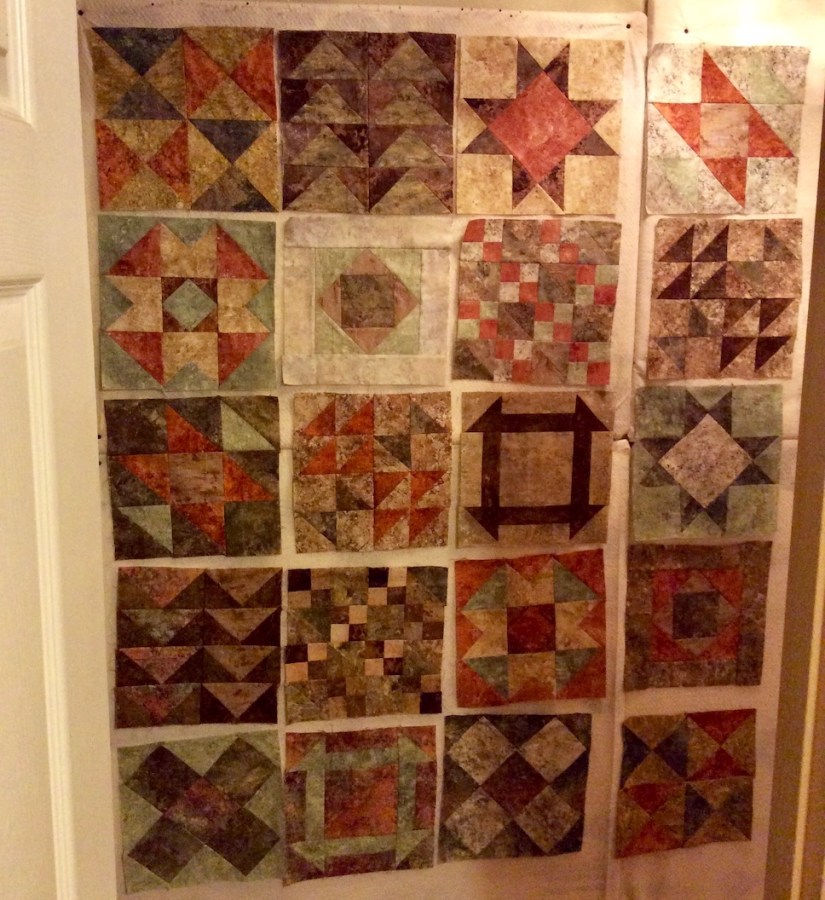
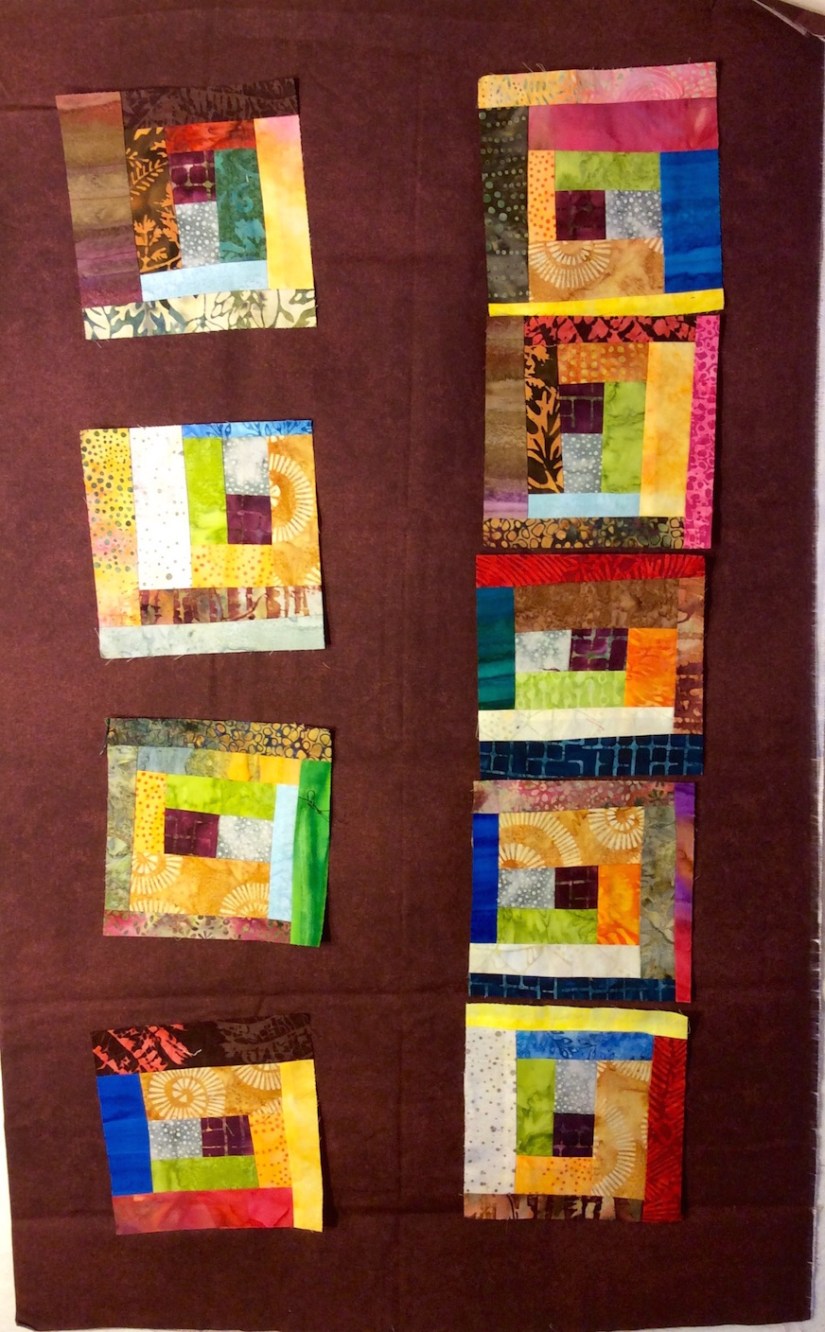
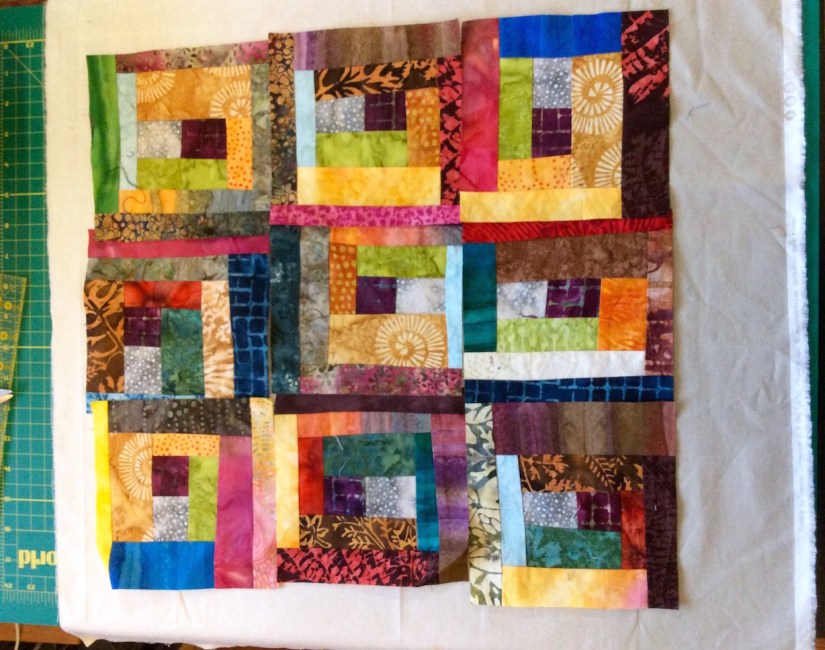
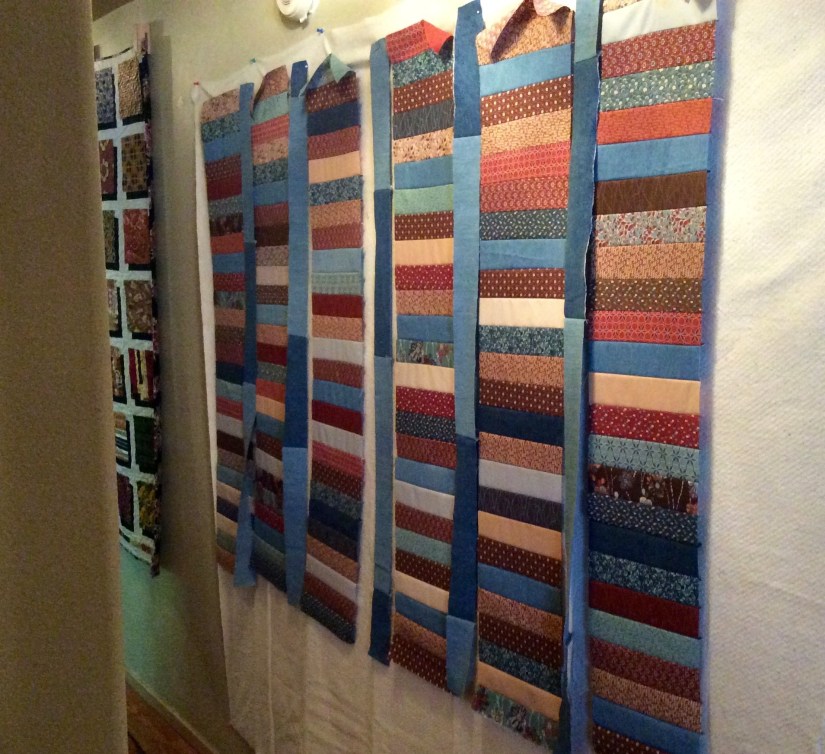
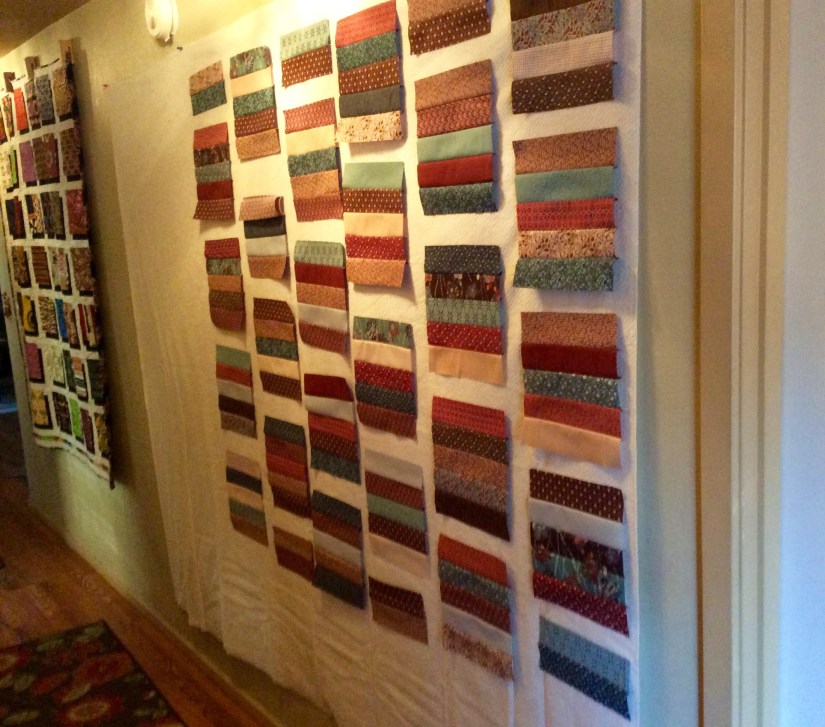
Yesterday I worked to turn the “hot mess” and former unfinished object (UFO) into something resembling a quilt top. I’ve named the quilt “Cozy Cobblestones” as the fabric is the Northcott Stonehenge Cobblestones line.
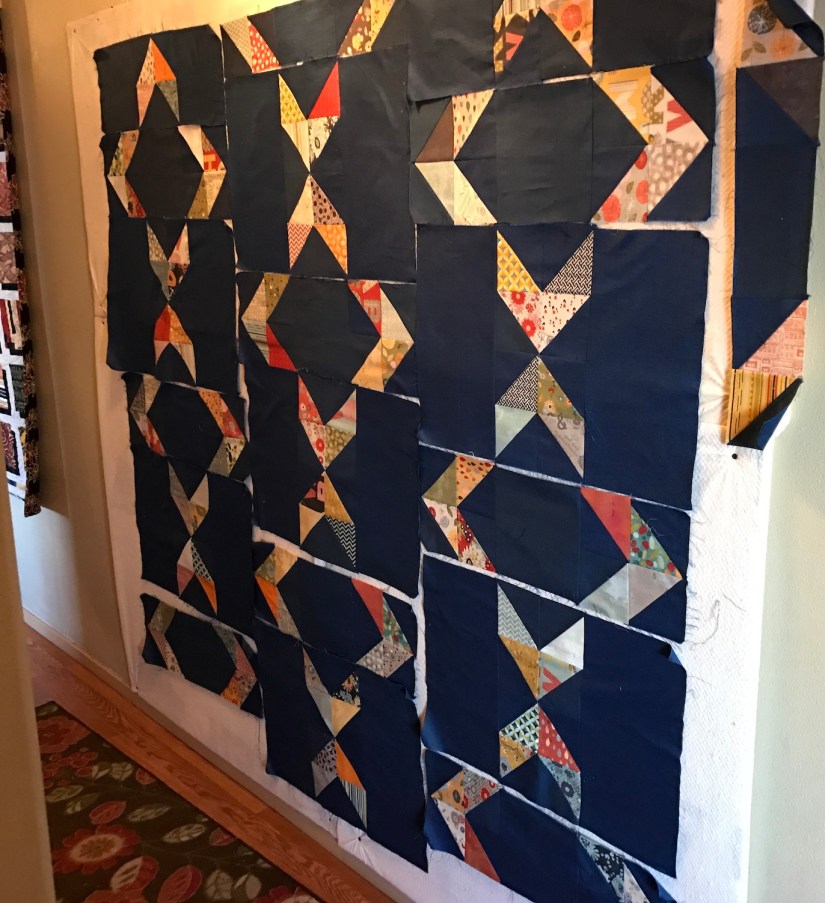
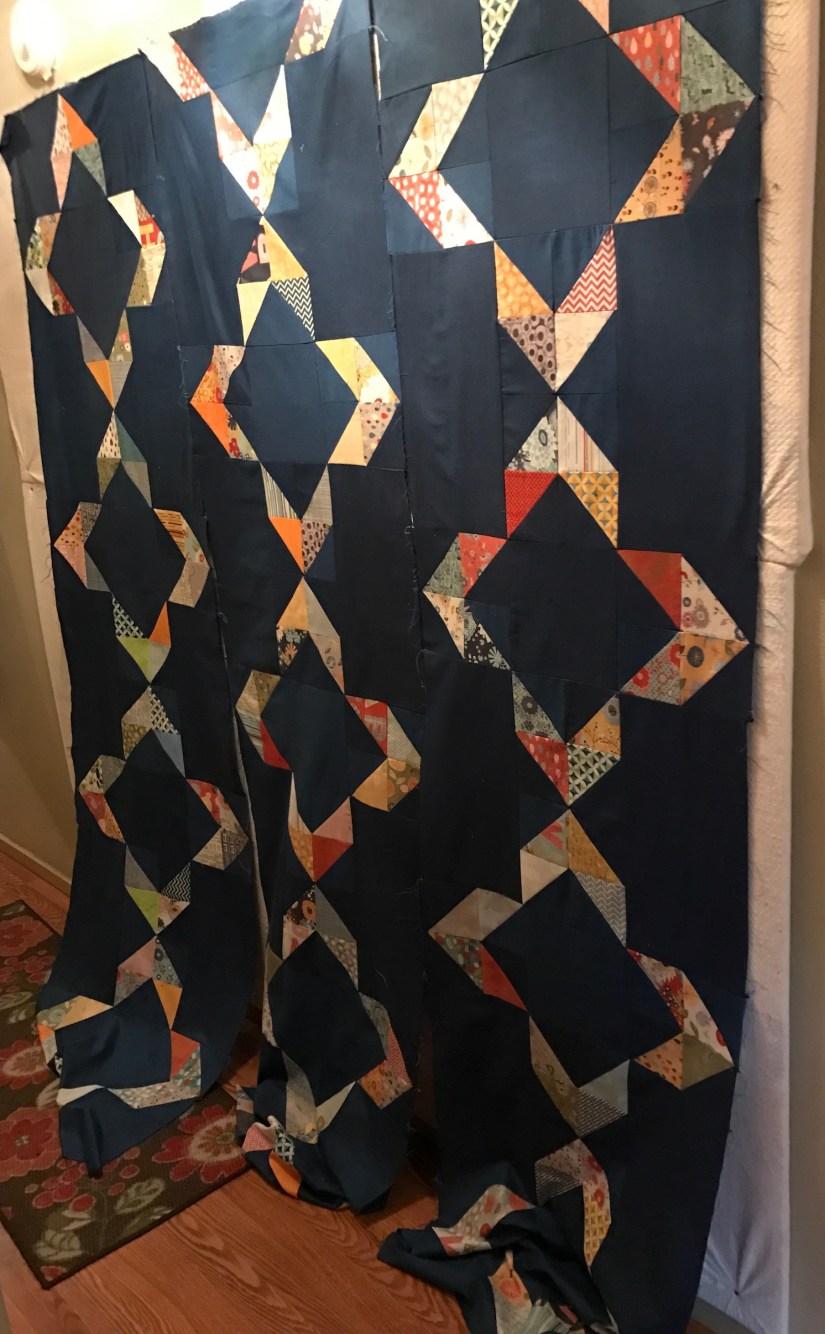
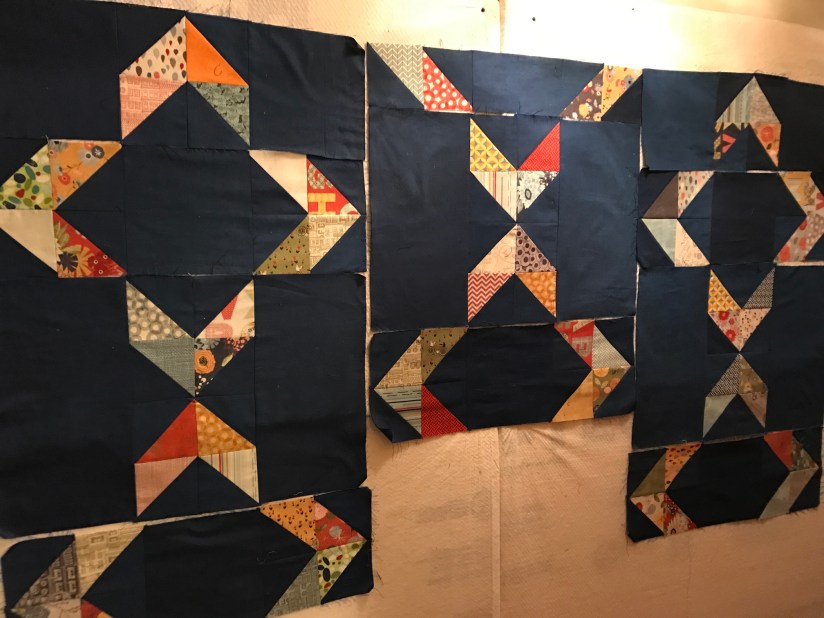
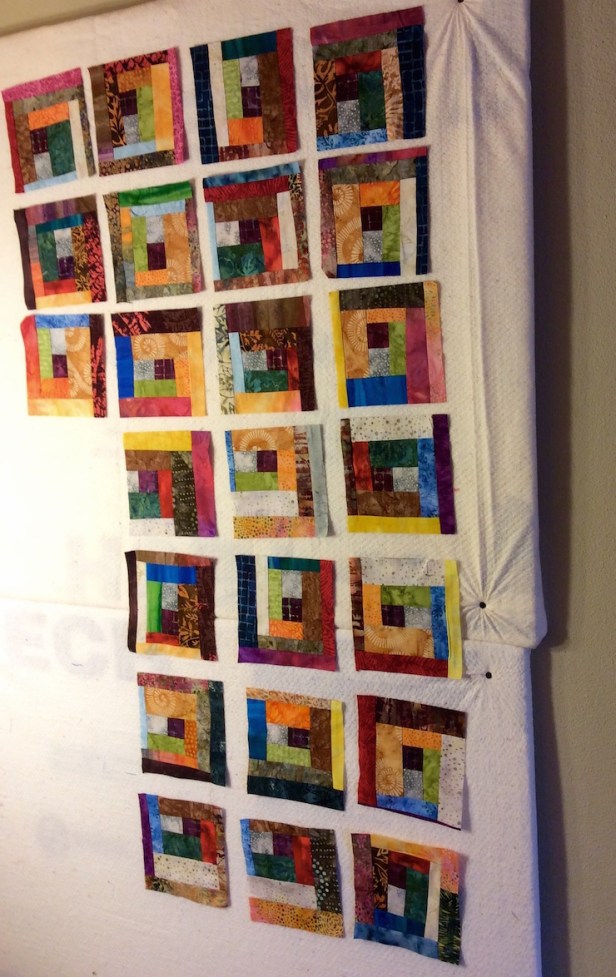
I promised better photos, however I was unable to keep my promise. Still struggling with the narrowness of my hallway, I had to take entire layout photos at an angle. Alas, this is one of the “cons” of having a design wall in a narrow hallway!
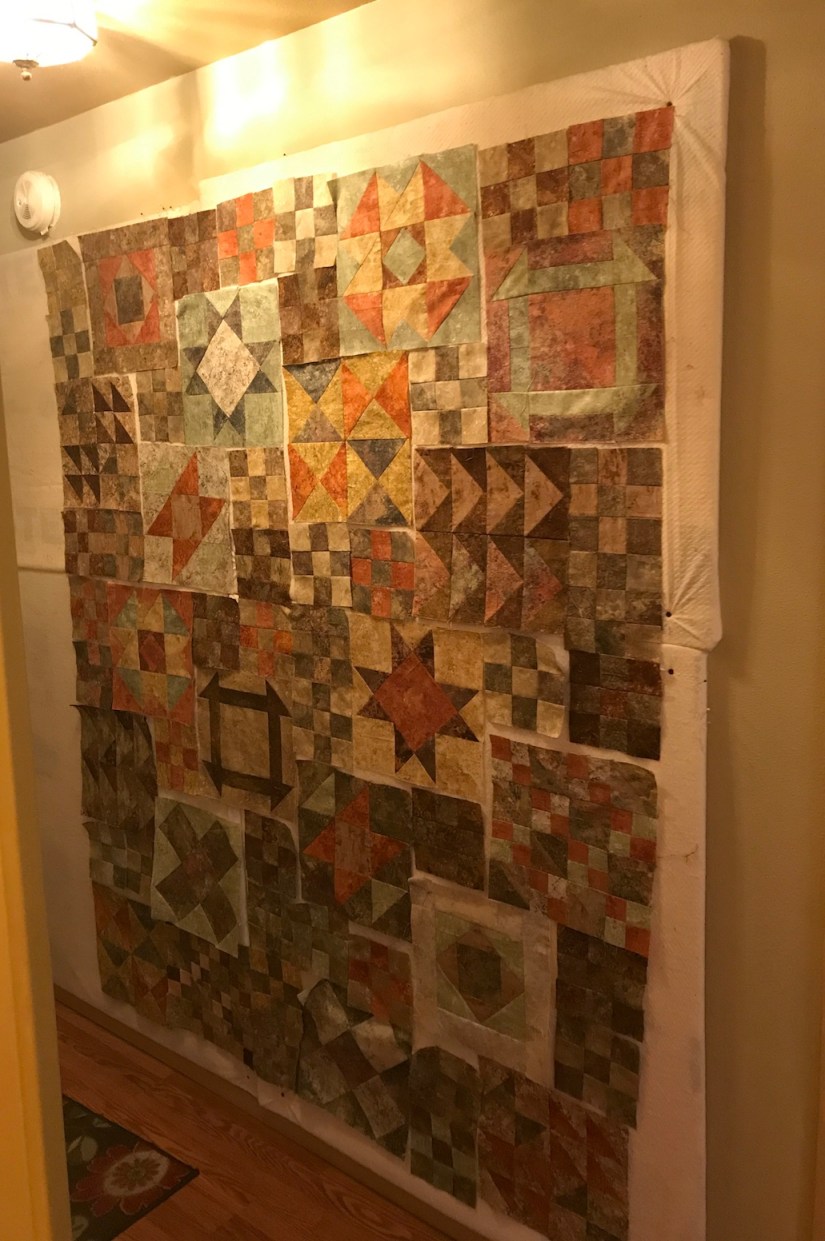
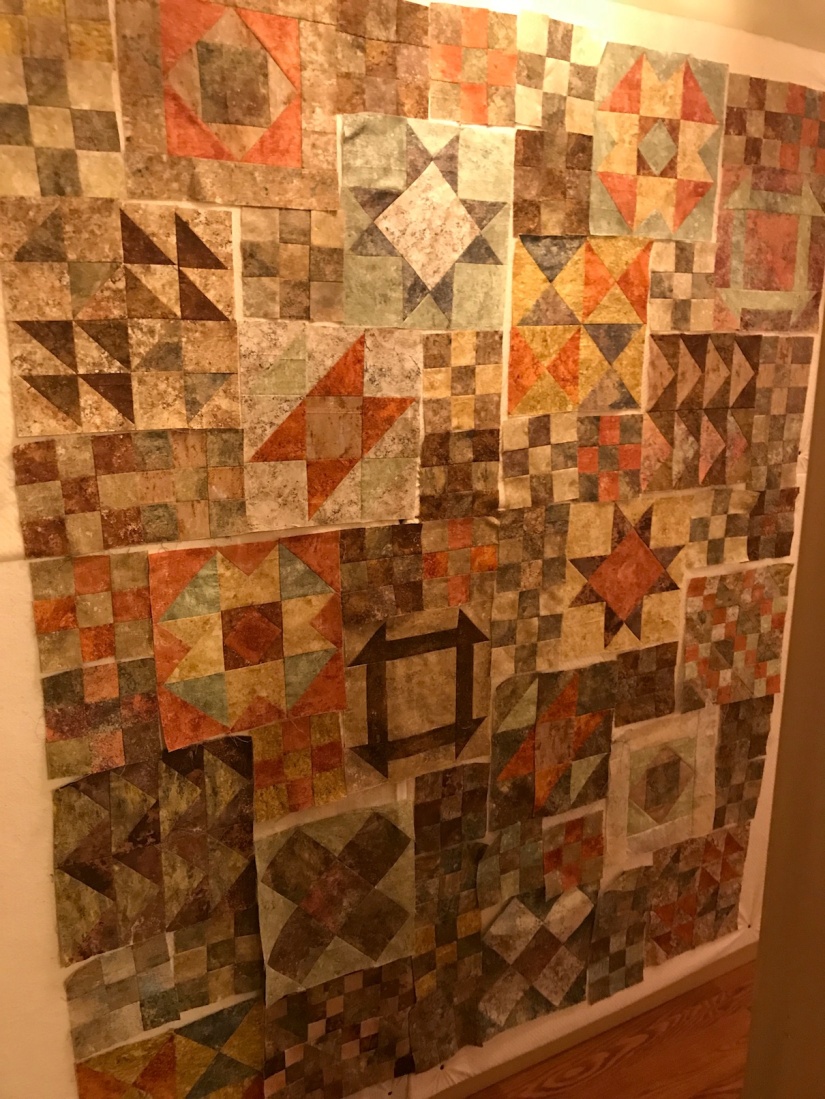
Here is one “head on” photo taken by smooshing myself against the opposite wall:

You are probably wincing at the lighting on the photos. Once I sew the blocks together, I am going to take the quilt outside for a proper photo!
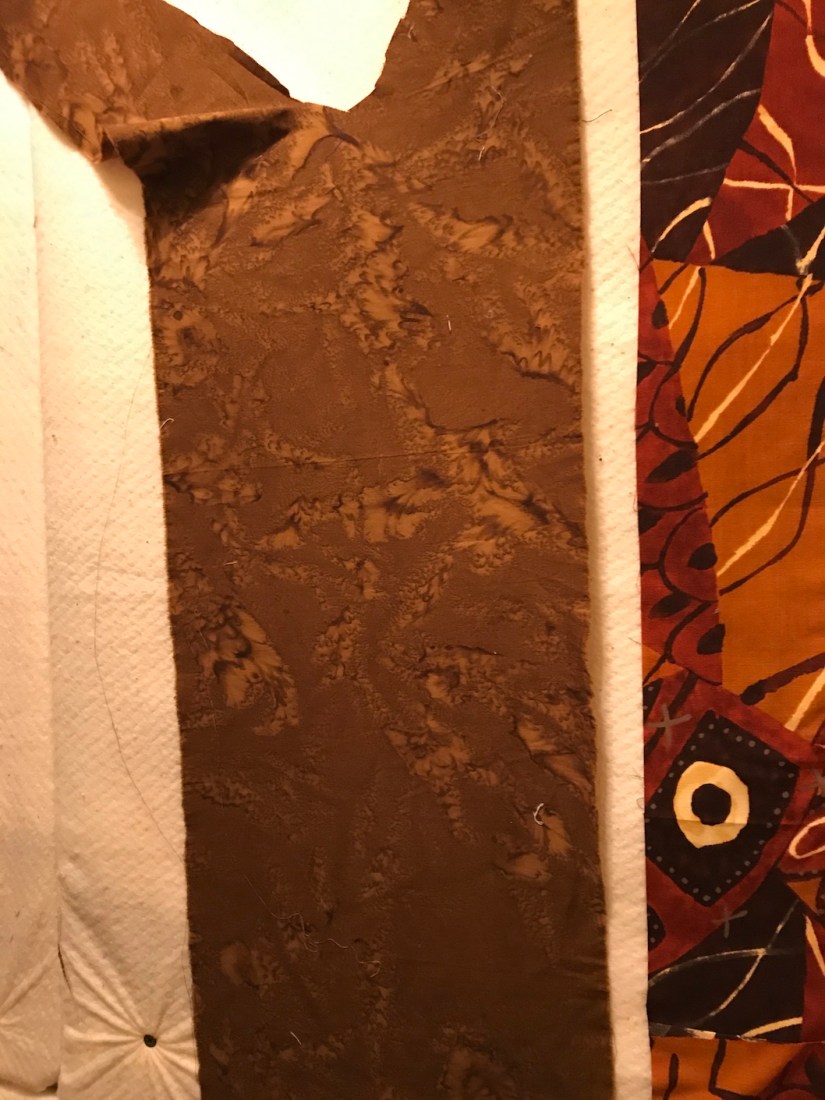
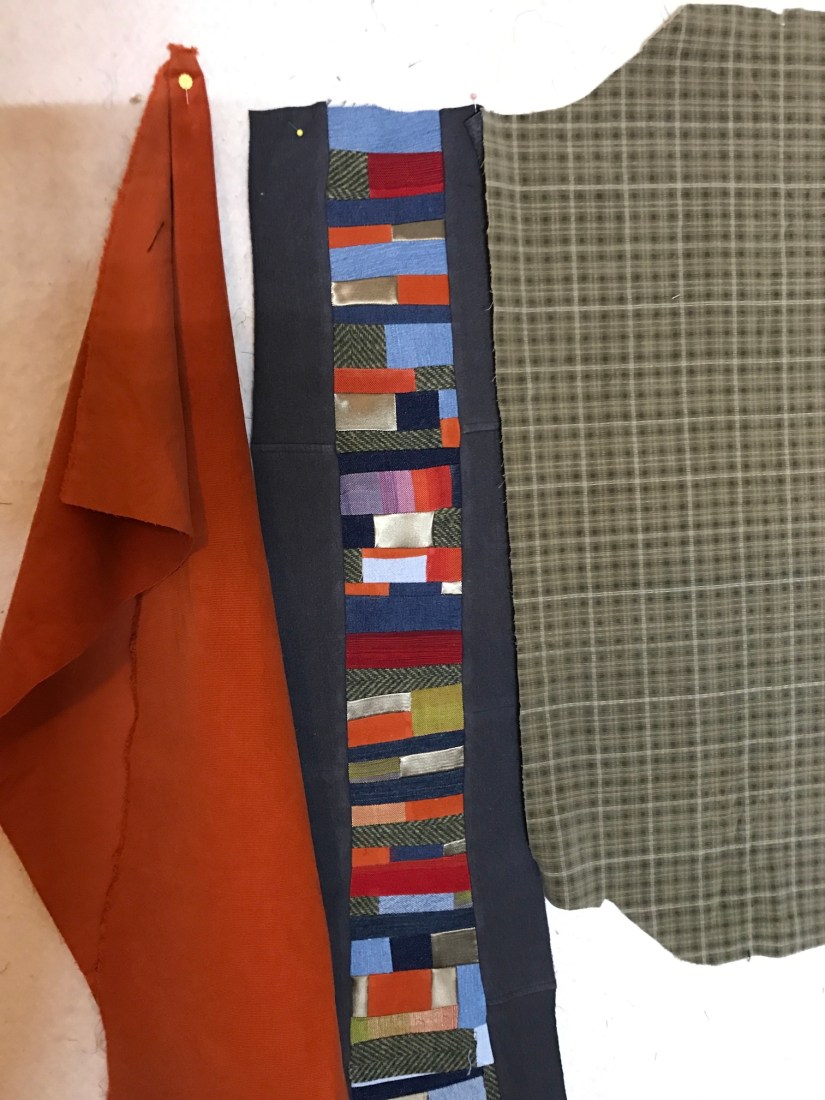
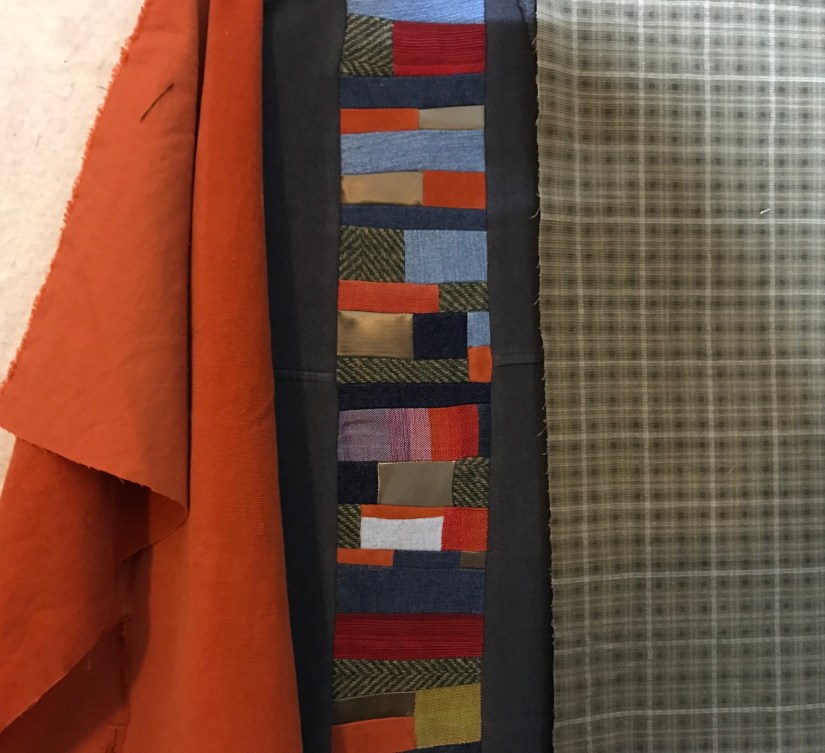
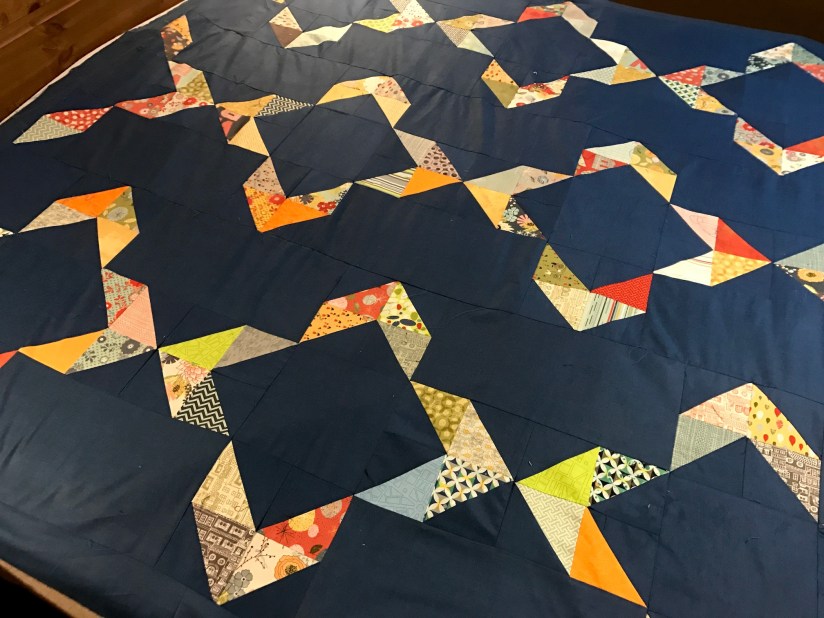
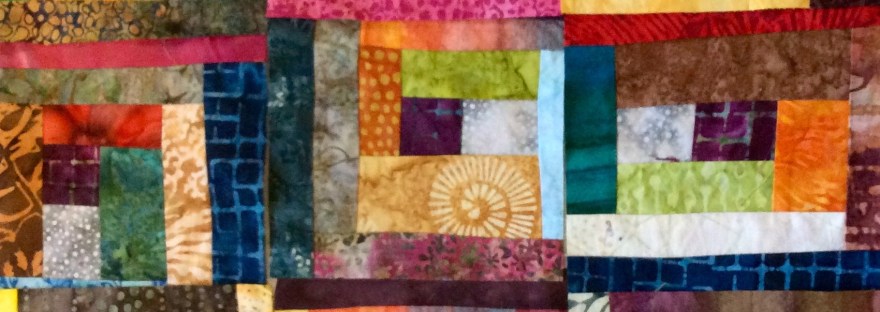
I am likely going to “float” the quilt top in additional Stonehenge fabric (I think I have enough yardage to put a “float” border around it). Here is the fabric I might use (it is my only choice unless I go out and try to find some more):

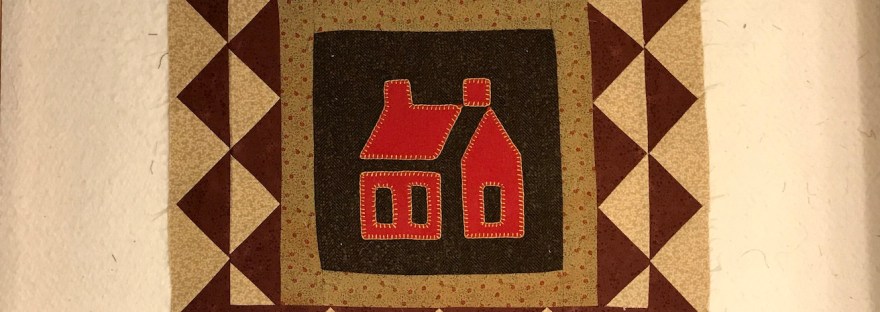
Next to a section of the blocks layout:

I might use the same fabric for the binding too as I am trying to use what I have in my stash. A contrasting binding might be nice but I would have to purchase it new (and I am taking a hiatus from buying fabric right now).
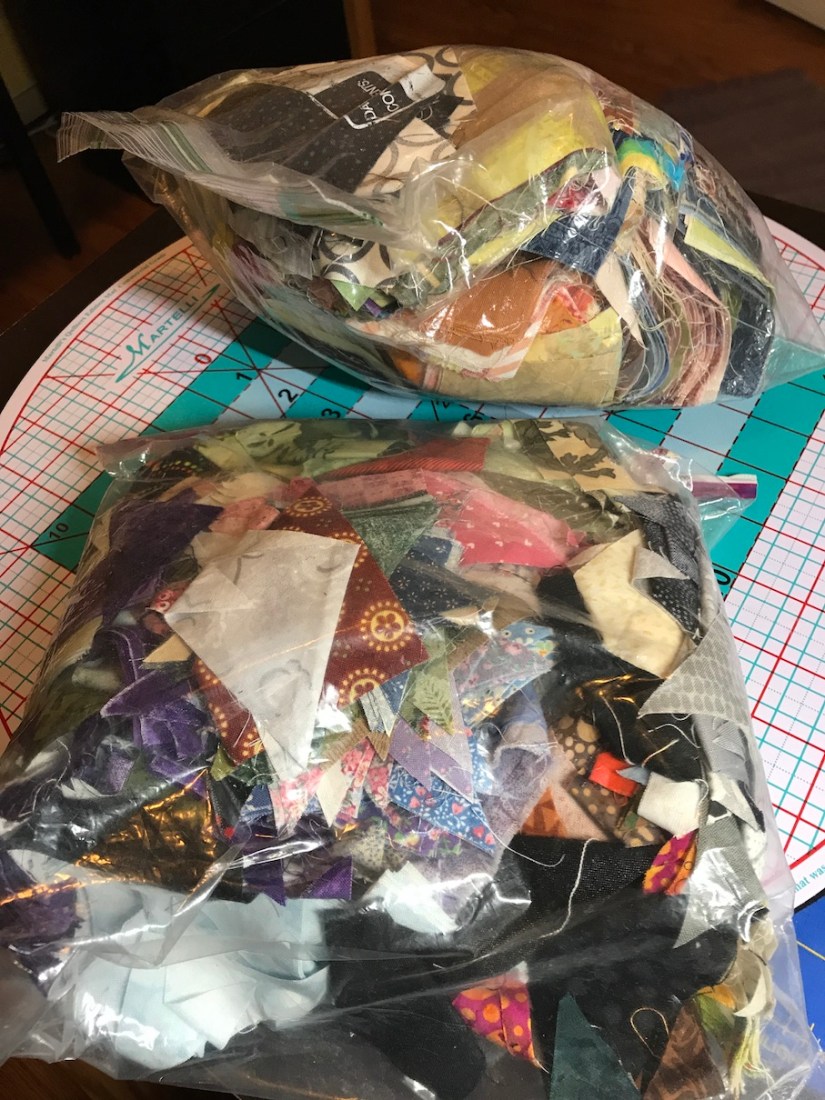
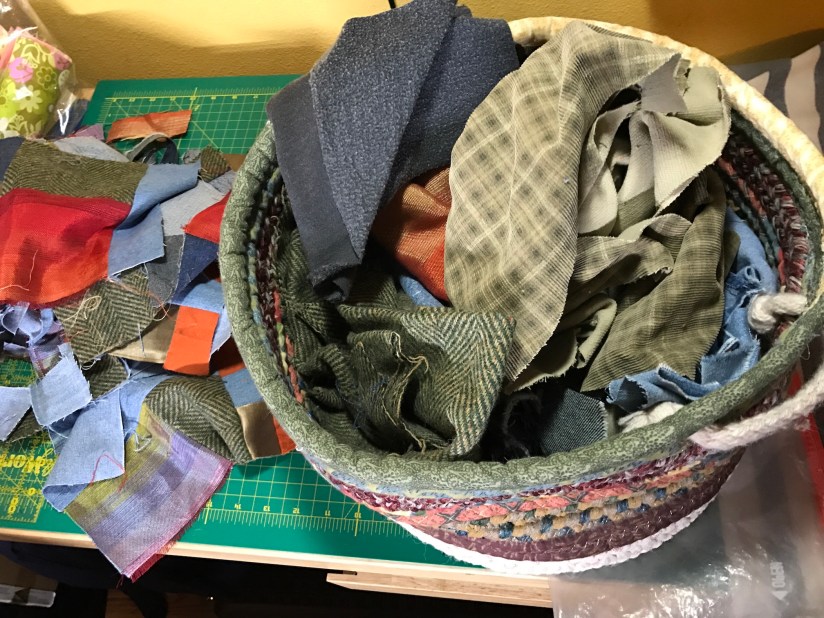
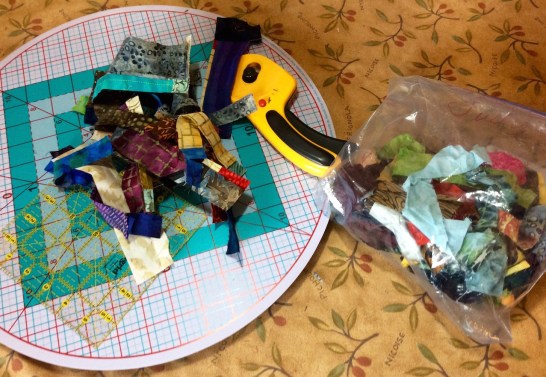
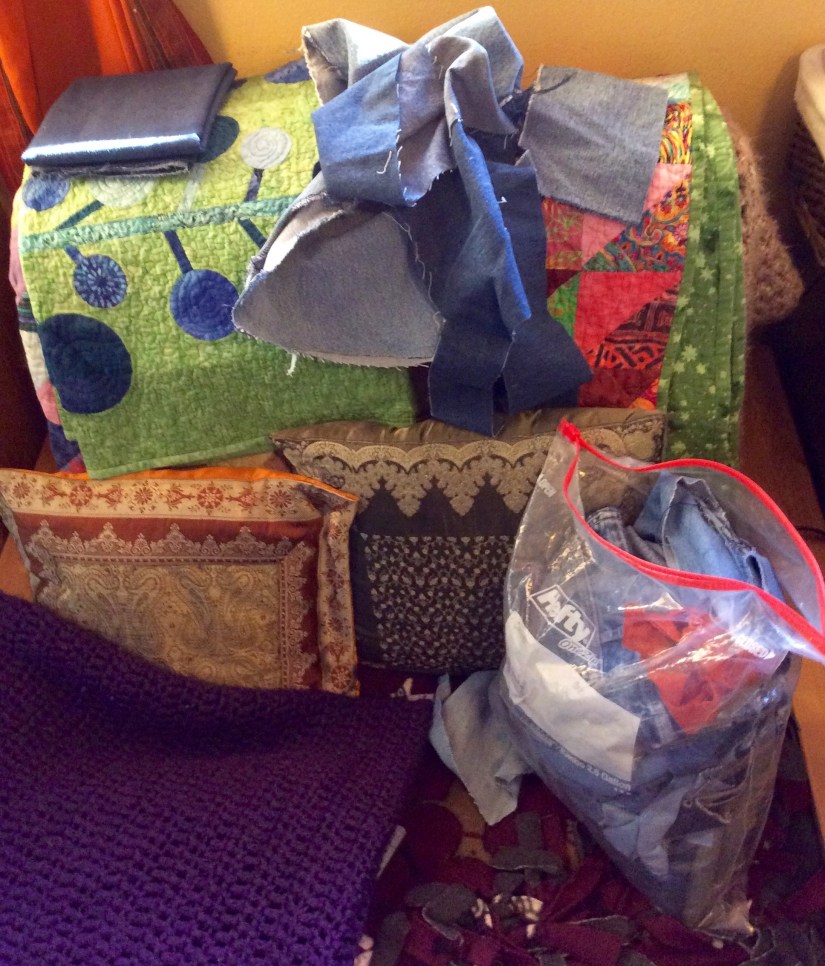
Speaking of my “stash”, I put the scraps and the two remaining fat quarters that I did not use up, in a future “Challenge Bag” (see post Basket of Challenges):
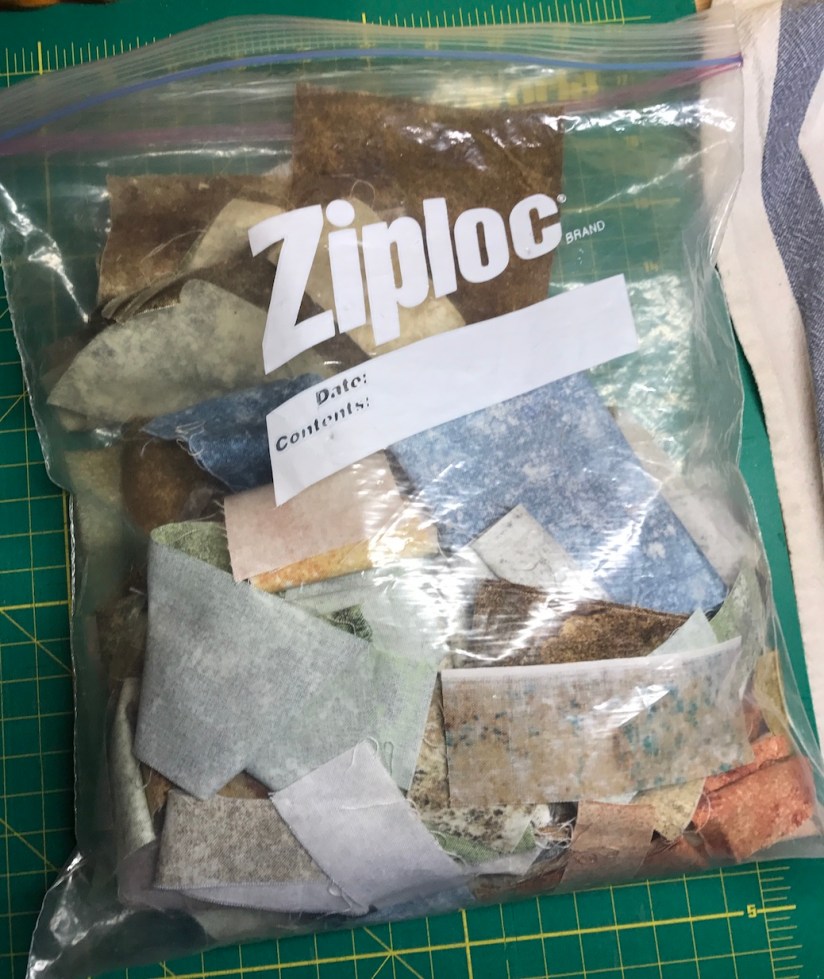
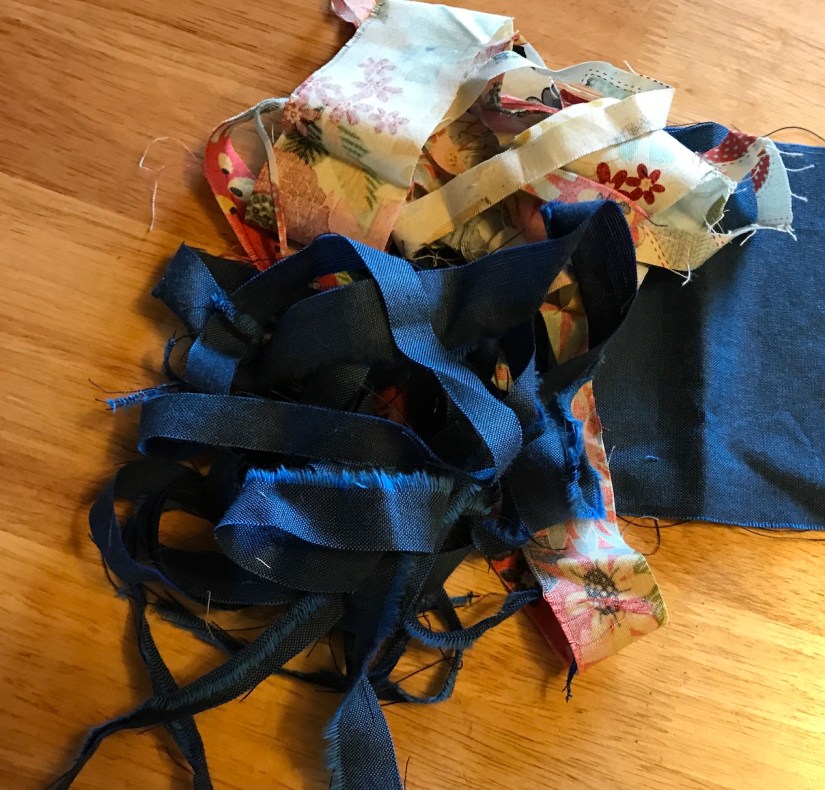
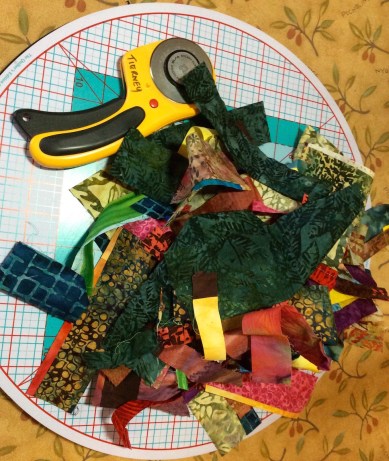
Inside the scrap bag you will see the blue scraps that I loved (from another Stonehenge line that a quilting friend donated) but could not work into the piece. We’ll see what I make in the future with this small bag of scraps.
The remaining scraps are fairly small as I worked hard to harvest any piece I could turn into a 2.5″ x 2.5″ block:
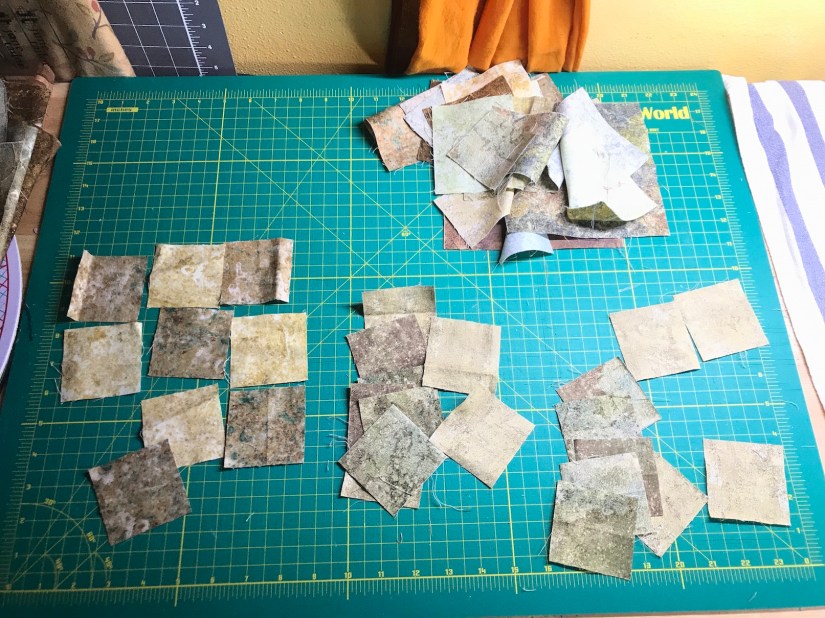
Quilters reading this may wince, but I did not have enough length of any of the scraps from piecing the original 12″ blocks to make the 6′ nine-patch blocks using the quick “strip-piecing” method. Instead I had to cut out individual 2.5″ x 2.5″ pieces and sew them together to make 42 6-inch nine-patch blocks! I did “chain-piece” the heck out the pieces after a while became a nine-patch block factory!
It was definitely an old school traditional piecing!
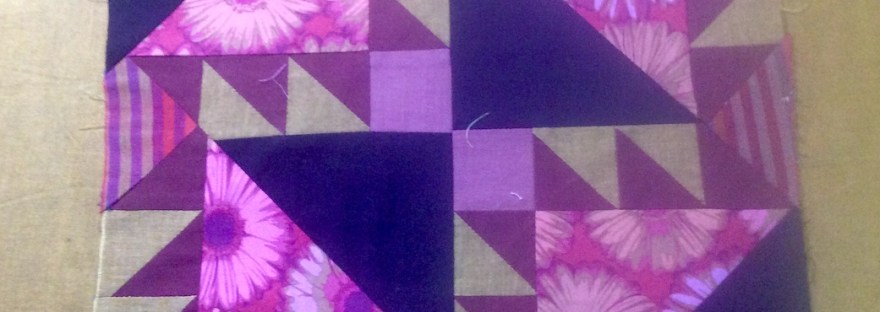
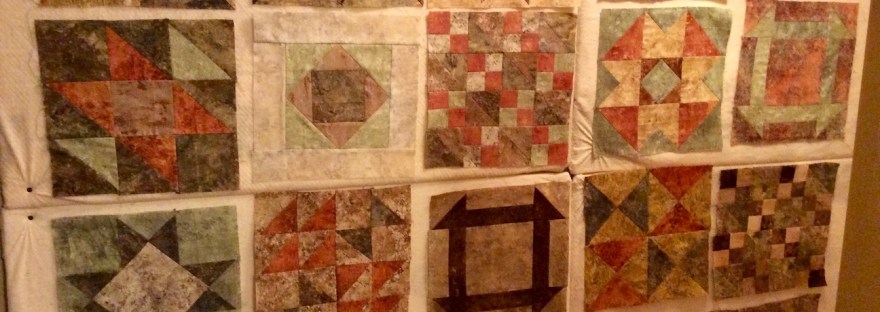
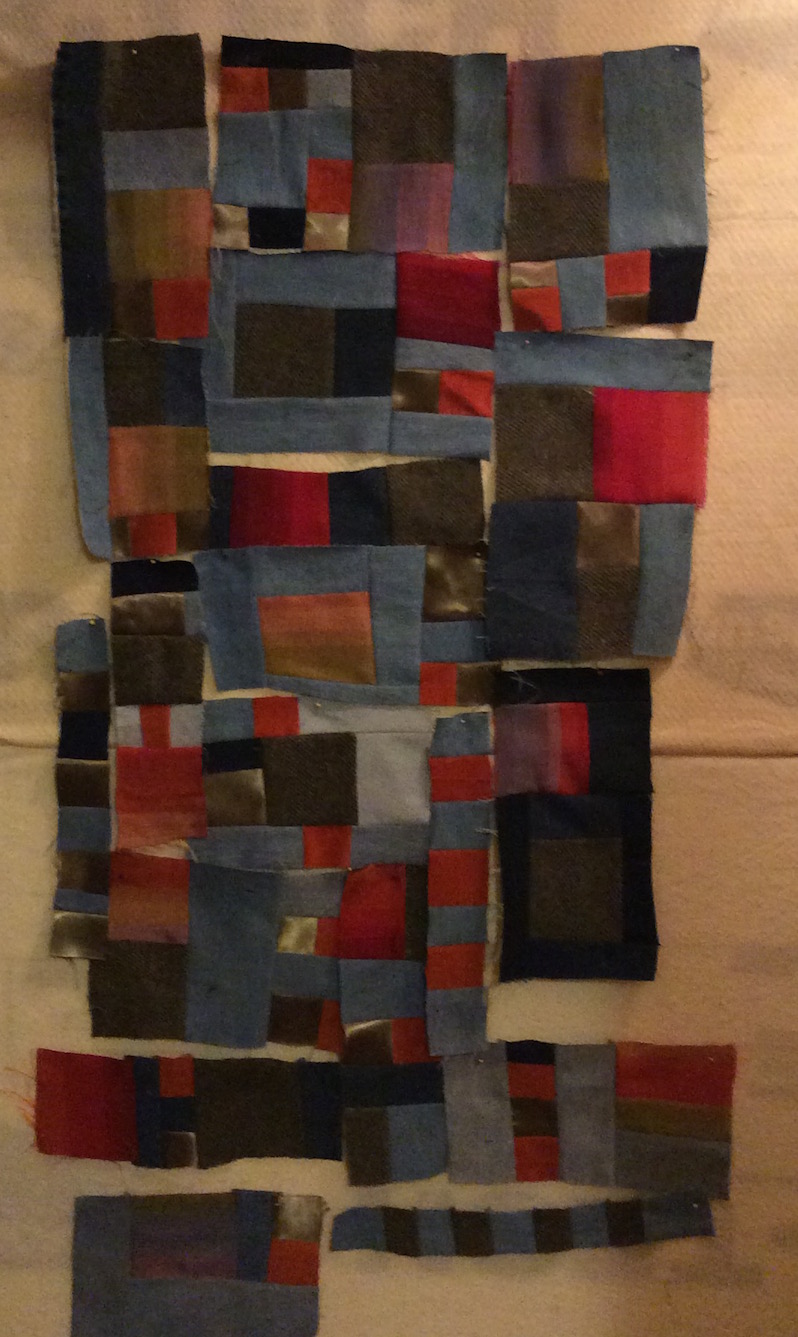
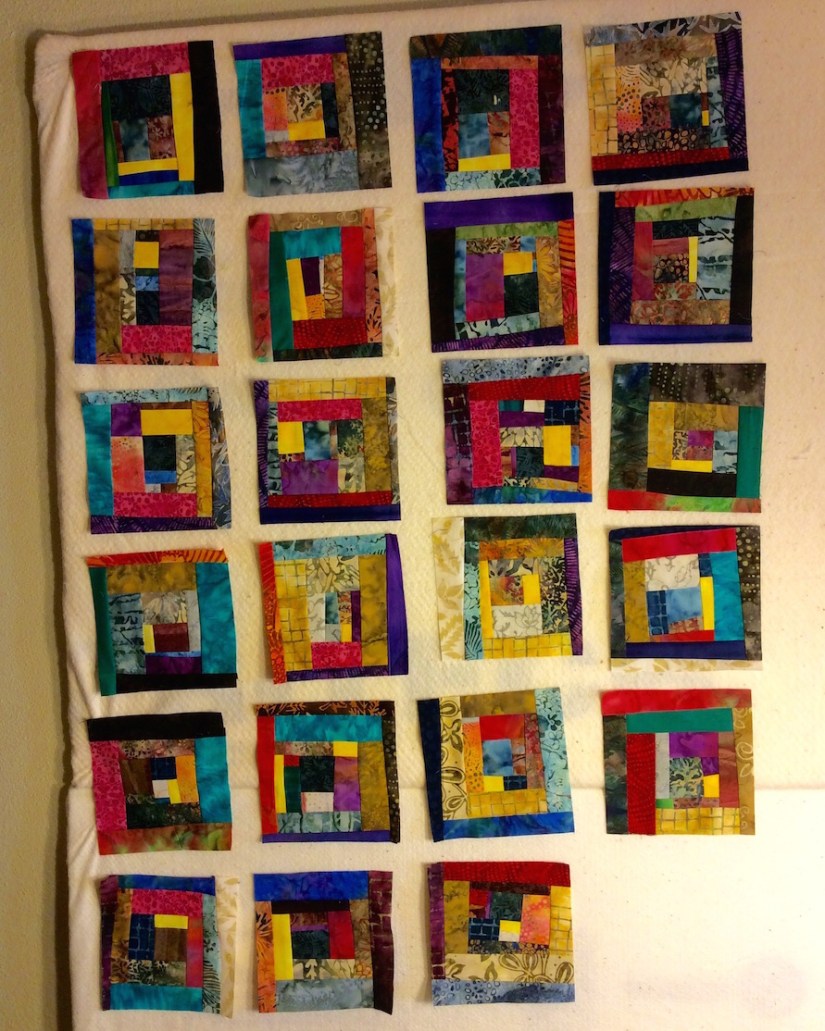
I am feeling pleased with my progress on the “UFOs” in this photo, this quilt top is the #4 in the photo below:
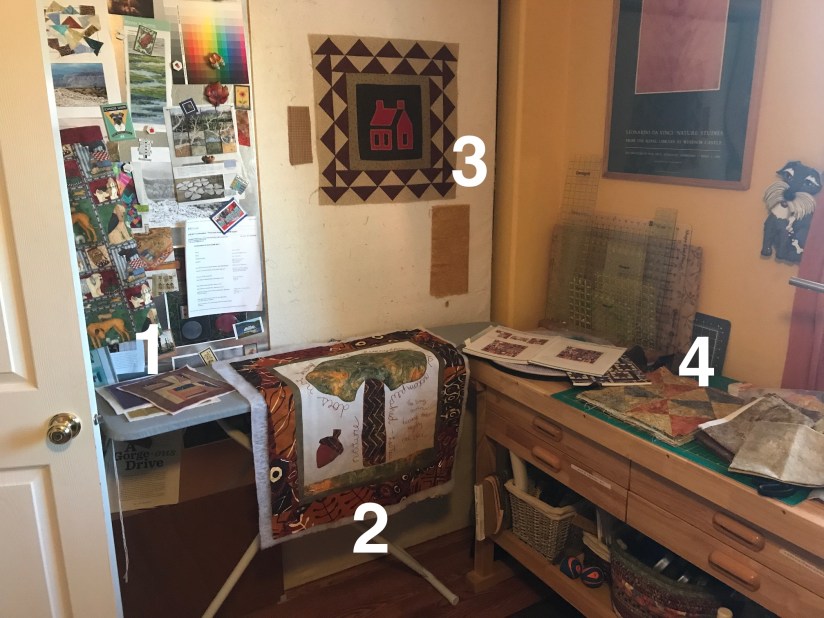
Once I get it all sewn together, I guess I need to work on the only remaining “UFO” – #3 (Medallion quilt) – but I am not feeling inspiration on that one yet!
Postscript
In addition to a push to complete my unfinished projects, I’ve recently experimented with a couple paper-crafting/card making projects in the paper-crafting/beading area I set up in my sunroom:
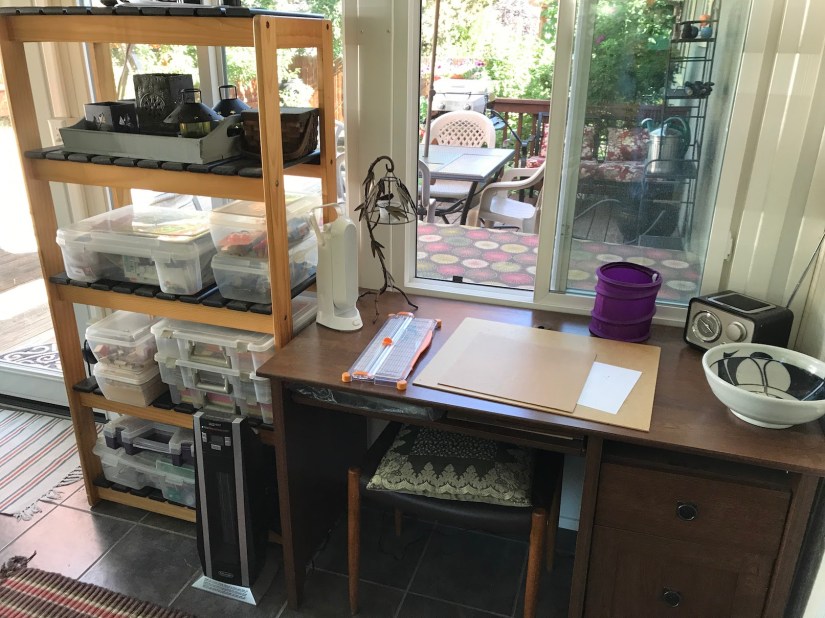
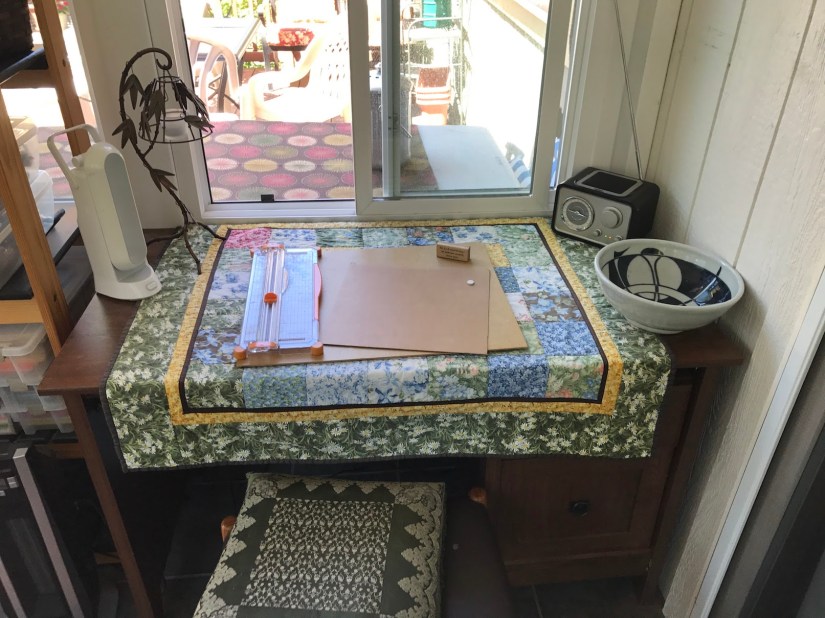
Here are the two cards I made:

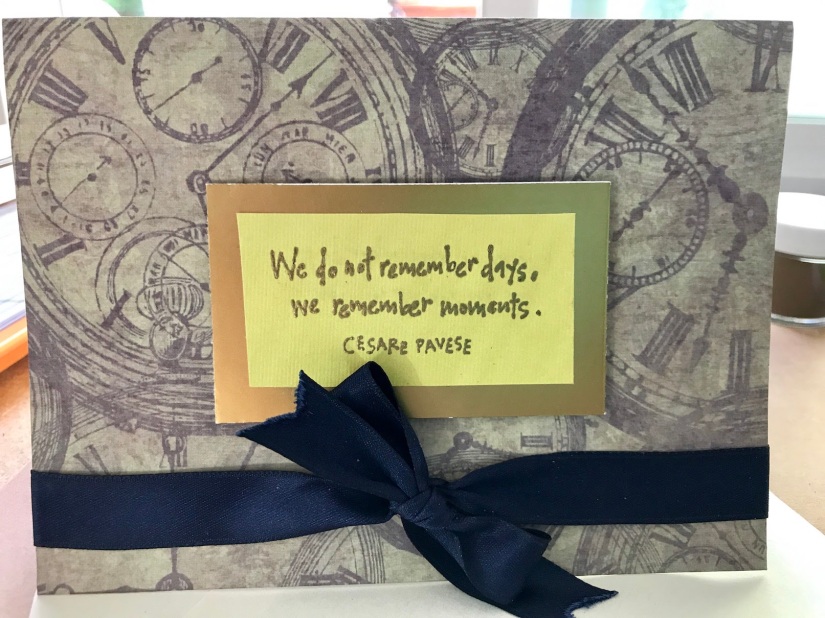
I am not sure if the recipients of these cards actually liked them, but I had fun making them. I listened to a classical radio station on my new(ish) thrift shop radio and found card making very meditative.
Card making was actually my first official crafting hobby that I did with others.
My work colleague got me started in the late 1990s. I think it opened my mind to starting quilting, which I learned shortly after. I still have many of my card making supplies from the late 1990s and early 2000s. I donated about 1/2 of those supplies to charity organizations but I still have some wonderful supplies to make more handmade cards (whether people want them or not – ha!)
















































 tierneycreates